City Intelligence · 11/12/2026
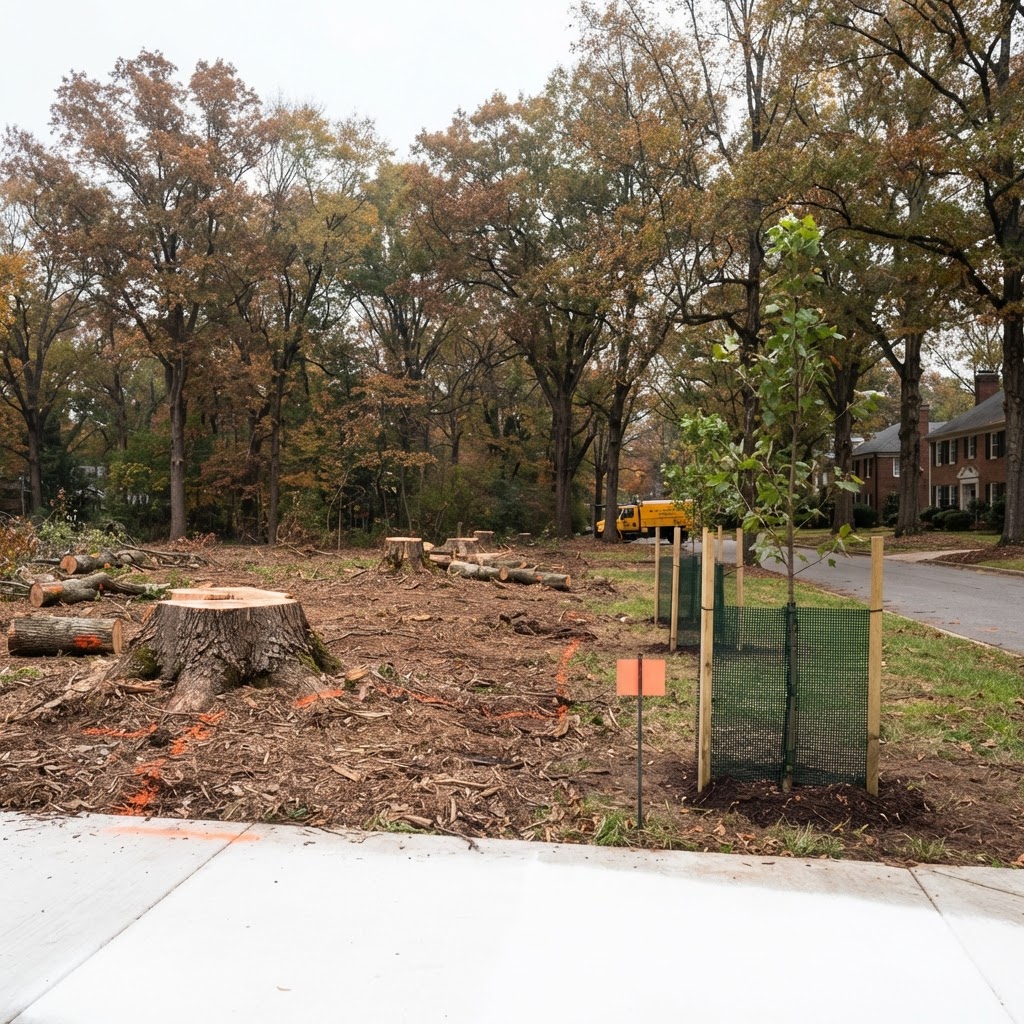
Canopy Daily · Nov 12: Charlotte Confronts Heritage Tree Losses as Fall Planting Mobilizes Across Mecklenburg
Data reveals Charlotte has collected roughly $4.5 million in mitigation fees under Unified Development Ordinance tree rules while canopy advocates push back against 'pay-to-cut' trends. As cooler November weather sets in, seasonal riparian and neighborhood planting efforts are ramping up across Mecklenburg County.
Regulations & Permits
Under Chapter 21 of the City Code and Article 20 of Charlotte's Unified Development Ordinance (UDO), permits remain strictly required to disturb or fell heritage trees—defined as North Carolina native species measuring 30 inches or more DBH (StatesLaws). Approved removals require mitigation payments of $500 per tree for non-developmental permits and $1,500 per tree for developmental requests, alongside replacement plantings (WFAE 90.7 - Charlotte's NPR News Source). Certified arborists holding Tree Risk Assessment Qualification (TRAQ) are required to file exemption requests to waive mitigation fees for qualifying hazardous or dead trees (The Charlotte Ledger).
Community Concerns
Advocates, including Sustain Charlotte, have raised concerns that the current UDO heritage rules risk functioning as a 'pay-and-plant removal system' rather than halting mature canopy loss, noting that developers can absorb mitigation fees as standard project overhead (WFAE 90.7 - Charlotte's NPR News Source). The city has tracked over 2,300 heritage tree removal requests since mid-2023, while replanting tracking shows only 323 verified replacements planted out of 838 required non-development permits, fueling calls for stronger preservation incentives to reach the city's 50% canopy target by 2050 (WFAE 90.7 - Charlotte's NPR News Source).
Ecosystem Challenge & Solution
Late-autumn conditions in Mecklenburg County bring soil erosion along urban waterways and riparian corridors after storm events, compounded by localized dry spells triggering citywide voluntary water conservation advisories (City of Charlotte). Arborists and land stewards recommend planting native riparian hardwoods and establishing deep wood-chip mulch beds to retain moisture without supplemental overwatering. Recommended species include swamp white oak (Quercus bicolor) and river birch (Betula nigra), which stabilize streambanks, thrive in heavy clay floodplains, and tolerate periodic seasonal inundation.
Volunteer & Planting
TreesCharlotte is launching its late-fall season with plans to plant 6,300 trees through March, including upcoming TreeDay events such as Charlotte East Language Academy on November 14 and Sharon Pointe Apartments on November 19 (6amcity, TreesCharlotte). Additionally, Charlotte Wildlife Stewards and Charlotte-Mecklenburg Storm Water Services are hosting a Chantilly Pond cleanup and invasive removal on November 14, followed by Creek ReLeaf staging on November 20 and planting on November 21 at Long Creek Greenway (Charlotte Wildlife Stewards).