City Intelligence · 11/15/2026
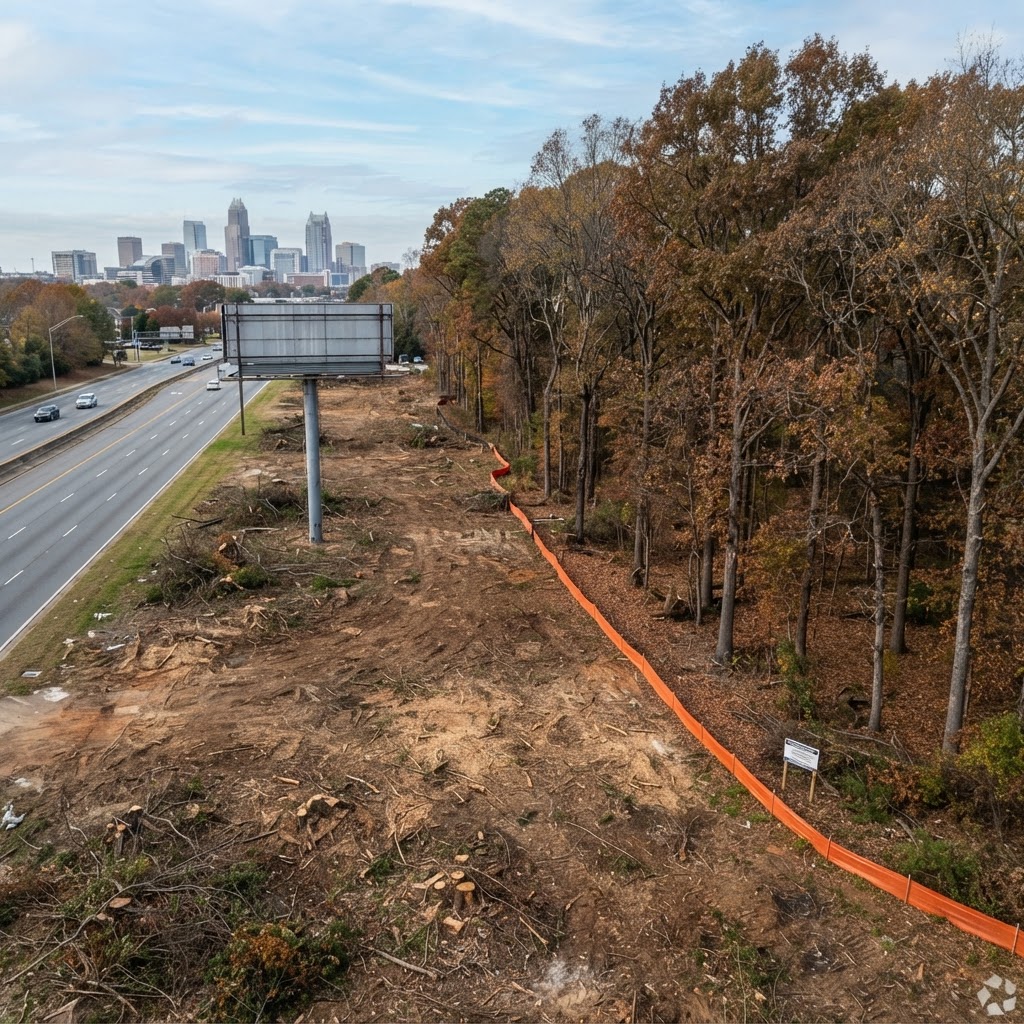
Canopy Daily · Nov 15: Charlotte Canopy Daily: Controversy Erupts Over 40 Billboard Tree-Clearing Permits Across Mecklenburg
Mecklenburg County leaders and local advocates are demanding an immediate pause after 40 state-approved permits to clear vegetation along corridors for billboard visibility sparked public outrage. Meanwhile, arborists navigate Unified Development Ordinance tree regulations as late-autumn planting season takes root across Charlotte.
Regulations & Permits
Statewide regulatory friction is colliding with local tree management following revelations that 40 NCDOT-approved tree-clearing permits have been issued in Mecklenburg County under state budget rules enabling billboard firms to clear up to 500 feet of roadside vegetation for a $400 fee (WBTV). Within city limits, municipal tree work remains governed by the Unified Development Ordinance (UDO) Chapter 21/Article 20 rules, where arborists must secure permits before disturbing native heritage trees measuring 30 inches DBH or larger (WFAE). Mitigation payments sit at $500 per tree for non-development residential actions and $1,500 per tree for developmental projects unless certified arborists submit an expedited exemption assessment proving the tree is dead, structurally compromised, or fails a Level 3 tree risk assessment (WFAE).
Community Concerns
Public outrage escalated this week following the clear-cutting of a 500-foot stretch containing over 100 trees along Independence Boulevard (U.S. 74) in Plaza Midwood by Adams Outdoor Advertising (Charlotte Observer). Sustain Charlotte, joined by State Sen. Caleb Theodros and local leaders, held press conferences demanding outdoor advertising companies halt removals and consult neighborhoods before utilizing the remaining approvals (WBTV). Residents report heightened traffic noise and light pollution, while stewards flag potential legal infractions after marked protected native dogwoods were cut down at the site (WBTV).
Ecosystem Challenge & Solution
As mid-November brings cooler temperatures and leaf drop to the Piedmont, urban trees face compacted, heavy clay soils alongside root disturbance from seasonal storms and corridor clearing. To improve root respiration and soil structure before hard winter freezes, arborists and stewards should apply 2 to 4 inches of aged organic wood-chip mulch in a wide saucer around the drip line, ensuring mulch does not touch the root flare. For replacement canopy and sub-canopy plantings this season, choose resilient native species such as Flowering Dogwood (Cornus florida) or White Oak (Quercus alba), both of which support regional wildlife and help reinforce Mecklenburg's urban canopy goals.
Volunteer & Planting
November marks peak planting season across the Charlotte metropolitan region; however, no specific newly scheduled public planting dates or volunteer registries were published in local reports for this date. Stewards and residents seeking active volunteer opportunities are encouraged to check TreesCharlotte and Mecklenburg County Park and Recreation's Nature Preserves division for winter canopy restoration days and neighborhood tree adoption events.