City Intelligence · 11/11/2026
Canopy Daily · Nov 11: DC Enforces Urban Tree Protections Amid Autumn Leaf Management
District urban forestry standards and preservation laws remain top priorities for arborists handling special trees and construction sites across Washington, D.C. Meanwhile, autumn brings citywide leaf collection and seasonal tree-bed soil maintenance into focus for local stewards.
Regulations & Permits
Arborists and contractors working in the District are reminded to adhere to the Urban Forest Preservation Act and D.C. Law 26-113: Tree Preservation Enhancement Amendment Act of 2026. Any work involving planting, pruning, or tree removal in the public right-of-way requires permits via the Transportation Online Permitting System (TOPS). Furthermore, Special Trees (measuring between 40 and 100 inches in trunk circumference) require a Special Tree Permit and tree fund fee (set at not less than $55 per circumference inch unless hazardous), while Heritage Trees (100 inches and above) remain strictly protected from removal. Mandatory pre-construction site evaluations and Critical Root Zone (CRZ) root-pruning approvals (for roots 2 inches or greater) through DDOT's Urban Forestry Division are required for all site development plans.
Community Concerns
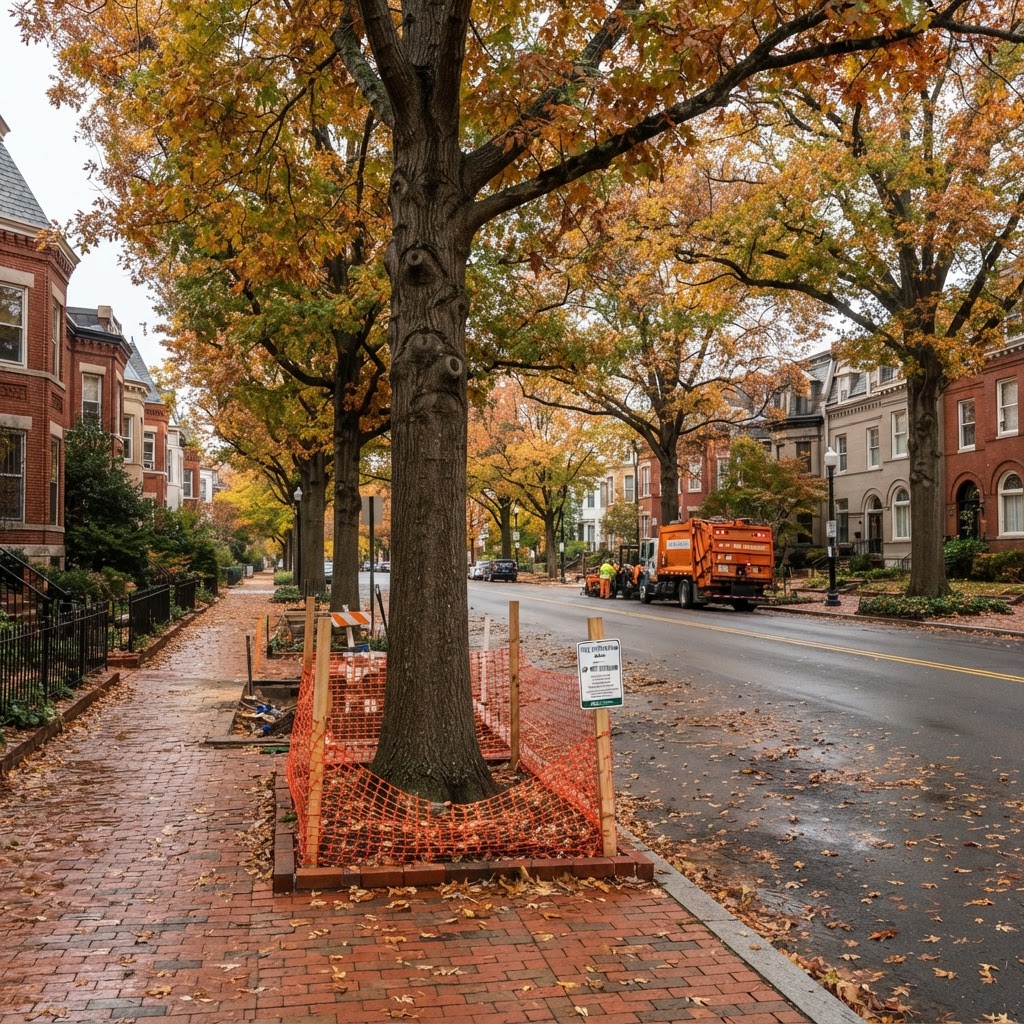
Autumn canopy care and streetscape maintenance are center stage as the Department of Public Works progresses through its scheduled citywide leaf collection season across Wards 1 through 8, as noted by the Executive Office of Mayor Muriel Bowser. Community stewards continue to voice concerns regarding street drains being clogged by uncollected leaves, while also navigating localized downtown street closures associated with seasonal civic events such as the upcoming holiday tree installation at CityCenterDC, detailed by the DC Metropolitan Police Department.
Ecosystem Challenge & Solution
Late-fall conditions in urban tree boxes and yards present soil compaction and moisture stress challenges following dry autumn spells, compounded by heavy leaf accumulation in curb bioswales. Arborists and tree stewards should aerate compacted urban soils using non-invasive techniques (such as vertical mulching or air excavation around root flare zones) and top-dress basins with 2 to 3 inches of shredded leaf or bark mulch without volcano mounding. For landowners planning late-autumn canopy additions, Quercus alba (White Oak) serves as a resilient, long-lived native canopy choice well-adapted to District soils.
Volunteer & Planting
No newly announced public volunteer tree-planting events were recorded for today's brief. Stewards looking to participate in upcoming autumn planting, pruning, or canopy care projects are encouraged to connect with local canopy initiatives through the Urban Forestry Advisory Council and partner organizations for future weekend scheduling.