City Intelligence · 11/15/2026
Canopy Daily · Nov 15: DC Enforces Tighter Tree Protections Amid Potomac Park Canopy Battles and Autumn Pest Defenses
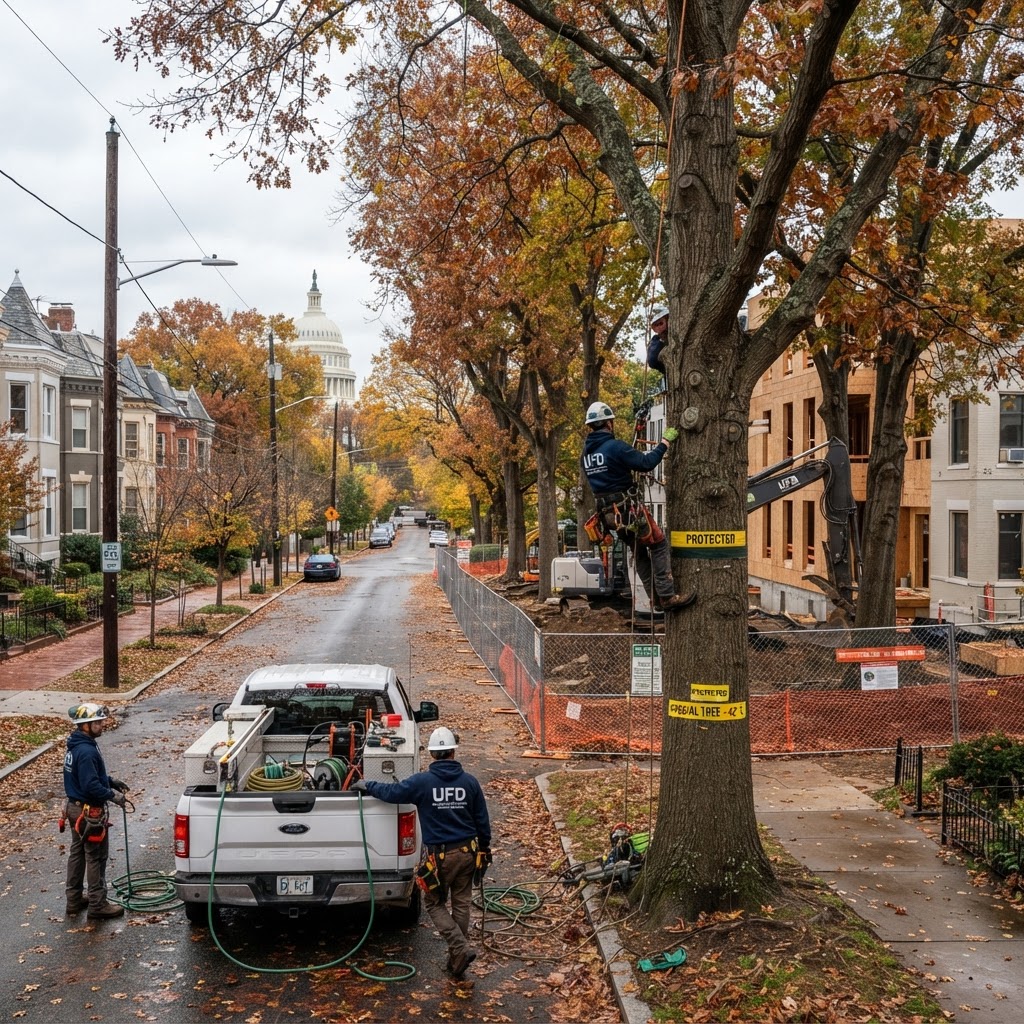
Washington arborists and developers are navigating stricter preservation standards following updates to the District's Special Tree threshold, which expanded protections to trees down to 40 inches in circumference. Meanwhile, local canopy advocates continue to monitor federal park removals while field crews address seasonal invasive pest pressures across the urban forest.
Regulations & Permits
Under D.C. Law 26-113, the Tree Preservation Enhancement Amendment Act of 2026, the District Department of Transportation's (DDOT) Urban Forestry Division now regulates Special Trees starting at 40 inches in circumference (approximately 12.8 inches in diameter), lowered from the previous 44-inch standard according to WSSI reporting. Contractors and land managers planning any construction or root-zone disturbance must include these newly protected trees on Tree Preservation Plans and acquire a Special Tree Removal Permit via DDOT's TOPS system, while Heritage Trees remain protected at 100 inches or greater circumference per DDOT Urban Forestry guidelines.
Community Concerns
Canopy advocates and local residents remain on high alert following large-scale tree clearing at East Potomac Park, where hundreds of mature canopy trees were slated for removal or cut down by federal authorities, sparking legal intervention and formal protests documented by Casey Trees and covered by NBC4 Washington. Urban forestry partners and civic groups continue pushing for greater federal transparency, community input, and stronger alignment between federal park administrators and the District’s target to maintain a 40% urban tree canopy.
Ecosystem Challenge & Solution
Mid-November brings an urgent window to inspect trunks, hardscapes, and tree limbs for overwintering Spotted Lanternfly (SLF) egg masses, which regional surveys from the U.S. Forest Service District of Columbia Forest Resource Fact Sheet have documented across public and private lands. Arborists and stewards can manage infestations mechanically by scraping the mud-like egg masses into containers of rubbing alcohol or hand sanitizer to eliminate spring nymph emergence. For long-term canopy resilience and ecological support, property owners and stewards are encouraged to plant native canopy species such as White Oak (Quercus alba) or Swamp White Oak (Quercus bicolor).
Volunteer & Planting
No specific newly scheduled volunteer stewardship or planting dates were published for today; however, ongoing fall community planting initiatives and street tree care efforts continue through District partners such as Casey Trees and the DDOT Urban Forestry Division. Tree stewards can inspect recently planted street trees for establishment watering needs, clear autumn debris from protective tree boxes, and log hazard observations or open tree spaces via the District's 311 portal.