City Intelligence · 11/24/2026
Canopy Daily · Nov 24: Olympia and Thurston County Tighten Protections for Mature Canopy Ahead of Urban Forest Plan
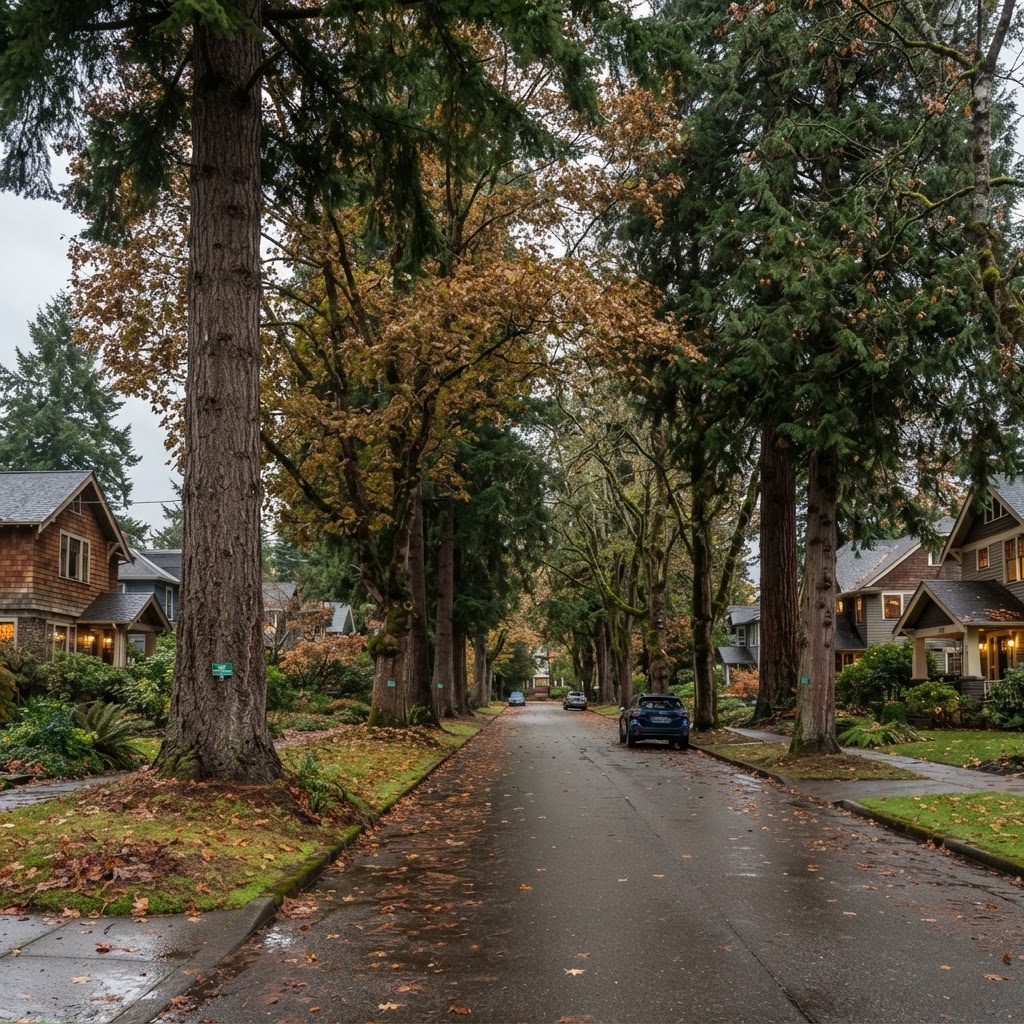
Olympia's Land Use & Environment Committee is advancing new administrative guidance prioritizing the retention of healthy trees 36 inches in diameter or larger on development sites. Meanwhile, Thurston County continues strict oversight of forest conversions and critical area hazard removals to protect regional forest cover.
Regulations & Permits
In Olympia, Community Development staff and the Land Use & Environment Committee (LUEC) advanced an updated Director's Interpretation for OMC Chapter 16.60, requiring early urban-forestry scoping meetings and prioritizing the retention of healthy, windfirm trees measuring at least 36 inches in diameter during project design (City of Olympia - File #: 26-0809). Across unincorporated Thurston County, landowners and arborists are reminded that tree removals in critical areas or their buffers require a Critical Area Review Permit (CARP) accompanied by an arborist's Tree Risk Assessment, and clearing for non-forestry use necessitates a Forest Lands Conversion Permit (Tree Cutting and Forest Land Conversion | Thurston County).
Community Concerns
Local residents have expressed mounting concern over the ongoing loss of mature trees and urban canopy to development before the city's first comprehensive Urban Forestry Management Plan (UFMP) is finalized, slated for completion by May 2028 (City of Olympia - File #: 26-0809). Canopy loss in urban areas also remains under scrutiny downtown following the removal of 26 street trees during recent infrastructure sidewalk repairs, with replanting plans pending (Olympia plans tree replacements as sidewalk project wraps | The Olympian). Nearby in Tumwater, the community has also mobilized around preserving urban heritage, salvaging large fallen limbs from the historic 400-year-old Davis-Meeker Garry oak for public use and artistic woodwork (Historic Garry oak branches to become community projects | The Olympian).
Ecosystem Challenge & Solution
Late autumn in South Sound brings saturated soils coupled with severe windstorms, elevating windthrow and limb-failure risks for mature trees. Arborists and stewards should conduct proactive structural pruning, assess root-plate stability in saturated soils, and protect the Critical Root Zone from soil compaction. For long-term landscape resilience and storm tolerance, planting deep-rooted native species such as Oregon white oak (Quercus garryana) provides exceptional windfirmness and high ecological value for native wildlife.
Volunteer & Planting
No specific upcoming volunteer planting work parties or public stewardship dates were published in current local notices for this week. Community members are encouraged to check upcoming winter restoration schedules through the City of Olympia Parks Stewardship program and the Thurston Conservation District.