City Intelligence · 11/21/2026
Canopy Daily · Nov 21: Olympia and Thurston County Tree Briefing for November 21, 2026
City and county officials are advancing interim guidance to prioritize the retention of mature trees measuring at least 36 inches in diameter while long-term Urban Forest Management planning progresses. Meanwhile, regional stewards are actively managing storm-damage risks highlighted by recent wind-related limb failures on iconic local Garry oaks.
Regulations & Permits
In the City of Olympia, Community Development staff and the Land Use & Environment Committee have moved forward with a formal Director Interpretation updating procedural enforcement of the Tree, Soil, and Native Vegetation Protection and Replacement chapter, as detailed in City of Olympia File 26-0809. The guidance institutes mandatory early scoping meetings between development applicants and the City Urban Forester, prioritizes the preservation of healthy, windfirm mature trees of at least 36 inches DBH, and requires that Soil and Vegetation Plans be authored by ISA Certified Arborists holding the Tree Risk Assessment Qualification (TRAQ). For unincorporated Thurston County projects, tree work within designated critical areas or their buffers continues to mandate a Critical Area Review Permit (CARP) accompanied by a formal Tree Risk Assessment, as outlined by Thurston County Tree Cutting and Forest Land Conversion.
Community Concerns
Local advocacy remains centered on preventing the loss of large, legacy canopy during ongoing urban infill while Olympia continues drafting its broader Urban Forest Management Plan (targeted for completion in May 2028), per City of Olympia File 26-0801. Regional concern over aging landmark trees was further heightened after high winds sheared large limbs from the historic 400-year-old Davis-Meeker Garry oak in neighboring Tumwater, sparking public debates over emergency pruning expenditures, public safety hazards, and canopy salvage as reported by The Olympian.
Ecosystem Challenge & Solution
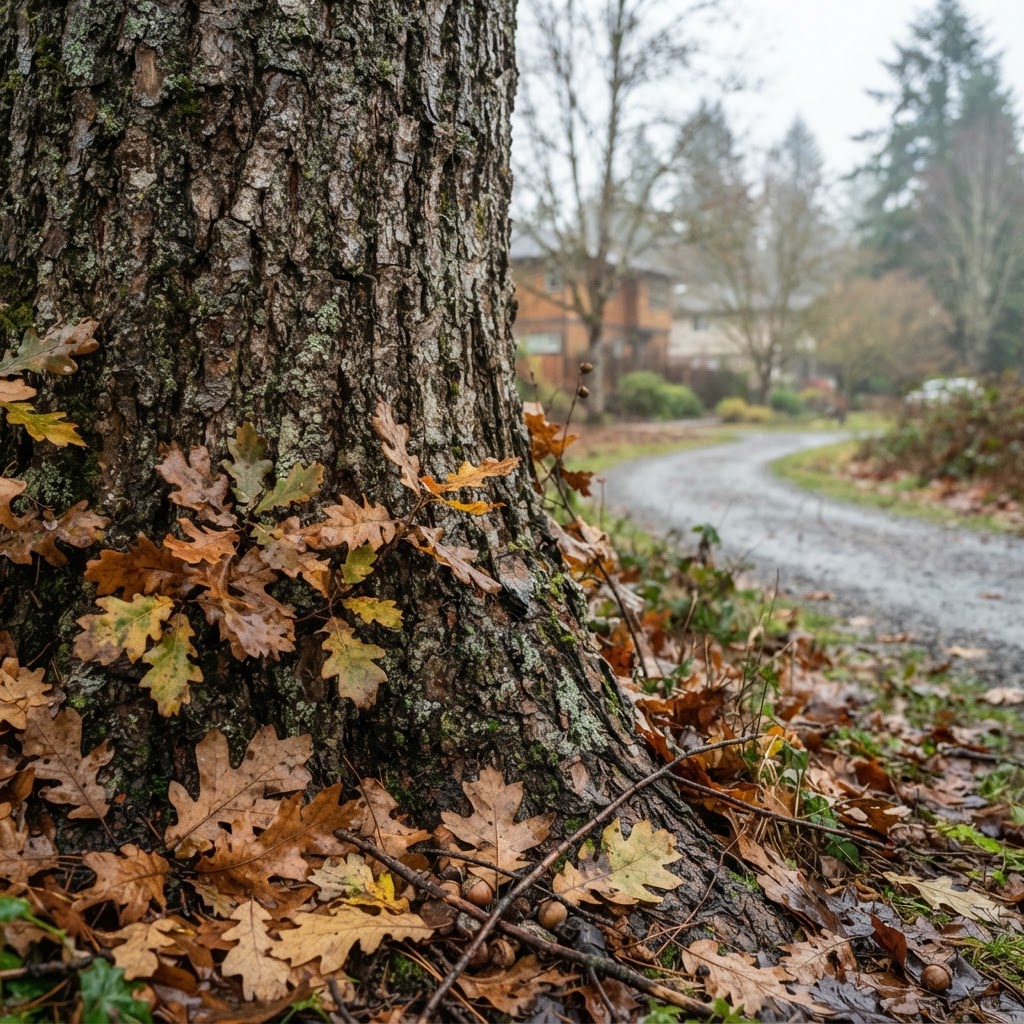
Late autumn in the South Sound brings saturated soils and severe windstorm events that place mature, structurally compromised trees at high risk of limb failure and windthrow. Practicing arborists and property stewards should conduct proactive structural assessments, implement crown-cleaning or reduction of heavy, overextended limbs, and protect rooting zones from soil compaction. For long-term canopy resilience and windfirm performance in urban settings, stewards should plant native Oregon white oak (Quercus garryana) or Douglas-fir (Pseudotsuga menziesii) in deep, well-draining soils with adequate space for mature root development.
Volunteer & Planting
No specific upcoming volunteer planting events or stewardship work parties with verified dates were announced in current municipal notices for this date. Stewards and residents seeking local tree-planting efforts and native habitat restoration projects are encouraged to monitor announcements from the City of Olympia's Urban Forestry and Park Stewardship divisions or the Thurston Conservation District.