City Intelligence · 11/14/2026
Canopy Daily · Nov 14: Seattle Tree Protection Permitting Upgrades and Seattle Forest Week Highlights
Seattle and King County arborists navigate new tree protection coaching services and standardized reporting tools amid ongoing code enforcement. Meanwhile, local urban forestry efforts focus on closing neighborhood canopy inequities and tackling root rot across regional stands.
Regulations & Permits
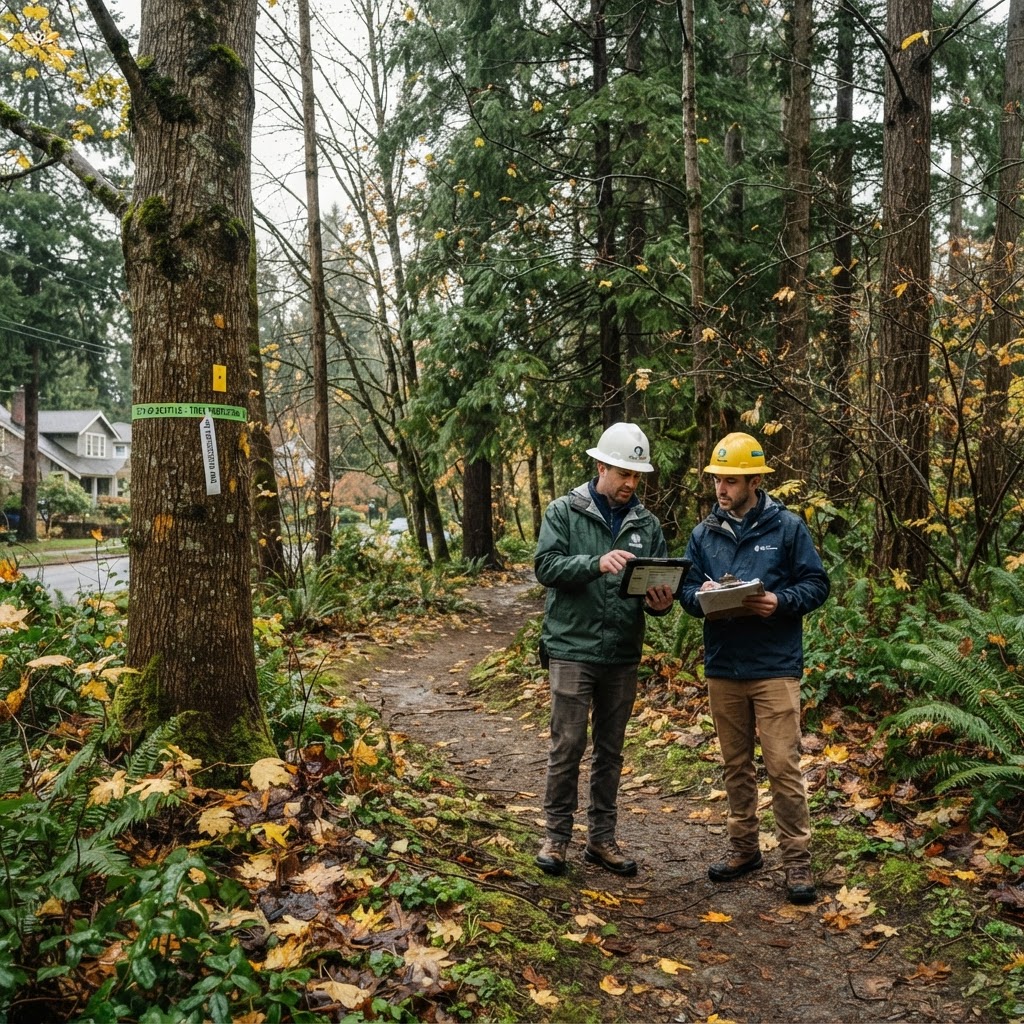
The Seattle Department of Construction and Inspections (SDCI) has introduced a new Tree Pre-Submittal Conference coaching service ("TreeSub"), enabling project applicants to consult reviewing arborists early on tree protection area requirements (Building Connections). In addition, SDCI rolled out a standardized Tree Information Form (TIF) for trial use as of November 2, 2026, which becomes mandatory on January 4, 2027, to streamline plan sets across environmentally critical areas (ECA), shoreline rules, and residential tree standards (Building Connections). These tools complement Ordinance No. 127300, which enforces the trunk diameter method for tree protection areas and dictates Tier 2 tree retention feasibility in Neighborhood Residential and Lowrise development zones (Seattle.gov Trees & Codes).
Community Concerns
Advocacy across King County centers on balancing urban density with Seattle's 30% canopy cover goal, especially after recent canopy assessments highlighted a loss of 255 acres of tree cover over the prior decade (AgeWise King County). Communities in historically under-canopied areas—such as the Chinatown-International District (CID), Beacon Hill, and the Duwamish Valley—continue to push for canopy equity, lower heat island burdens, and anti-displacement protections as the city drafts its upcoming Tree Equity Plan and citywide Climate Action Plan (Greenspace Seattle).
Ecosystem Challenge & Solution
Homogeneous upland forest stands in King County face severe health declines caused by fungal root rot, which stresses and kills mature Douglas-firs, accelerating canopy loss and reducing storm resilience (King County Forest Stewardship). As a practical management solution, arborists and land managers recommend selective thinning to relieve resource competition on retained legacy specimens, followed by underplanting with rot-resistant native species. Establishing resilient native species, such as western redcedar (Thuja plicata) or deciduous understory plantings, helps diversify stand age and break disease transmission pathways (King County Forest Stewardship).
Volunteer & Planting
Seattle Forest Week volunteer events run through November 15 across 40 citywide sites, organized by Trees for Seattle and the Green Seattle Partnership—recently recognized by the United Nations Environment Programme and FAO as a World Restoration Flagship (Seattle Magazine). Residents and tree stewards can participate in community work parties planting native trees and restoring forested parklands across King County, alongside emerging community-led pocket forest initiatives (Greenspace Seattle, AgeWise King County).