City Intelligence · 11/13/2026
Canopy Daily · Nov 13: Denver Considers Chapter 57 Code Overhauls Amid Ongoing Fall Drought
Denver city forestry officials are advancing proposed updates to Chapter 57 that include a legacy tree registry and consulting arborist requirements, while tree stewards confront late-fall drought restrictions following a dry summer. As property owners adapt to irrigation limits, local non-profits are deploying new grant funding to safeguard the city's vulnerable canopy.
Regulations & Permits
Denver forestry officials presented key proposed updates to Chapter 57 of the municipal code, as reported by Citizen Portal. The eight proposed updates include a voluntary, owner-nominated 'legacy tree' preservation program, expanded municipal authority to require certified consulting arborists on select redevelopment sites, and a payment-in-lieu fee structure set at a $1,600 benchmark per tree when canopy cannot be replaced on site. Under existing ordinances outlined by the City and County of Denver, commercial tree care contractors must remain licensed with the city, and permits remain strictly required prior to any tree removal, planting, or injection in public rights-of-way.
Community Concerns
Canopy loss driven by pests and downtown development pressures continues to challenge Denver neighborhoods. According to the Colorado State Forest Service, local organization The Park People was recently awarded state grant funding for their initiative, 'Addressing Denver’s Big Ash Problem,' focused on subsidizing affordable Emerald Ash Borer treatments for private-property ash trees and replanting in historically low-canopy neighborhoods. Meanwhile, downtown property owners and stewards are leveraging the city-backed Urban Forest Initiative, highlighted by the Downtown Denver Partnership, which offers ongoing grants through December 2026 to enlarge restrictive sidewalk tree beds and safeguard mature downtown street trees.
Ecosystem Challenge & Solution
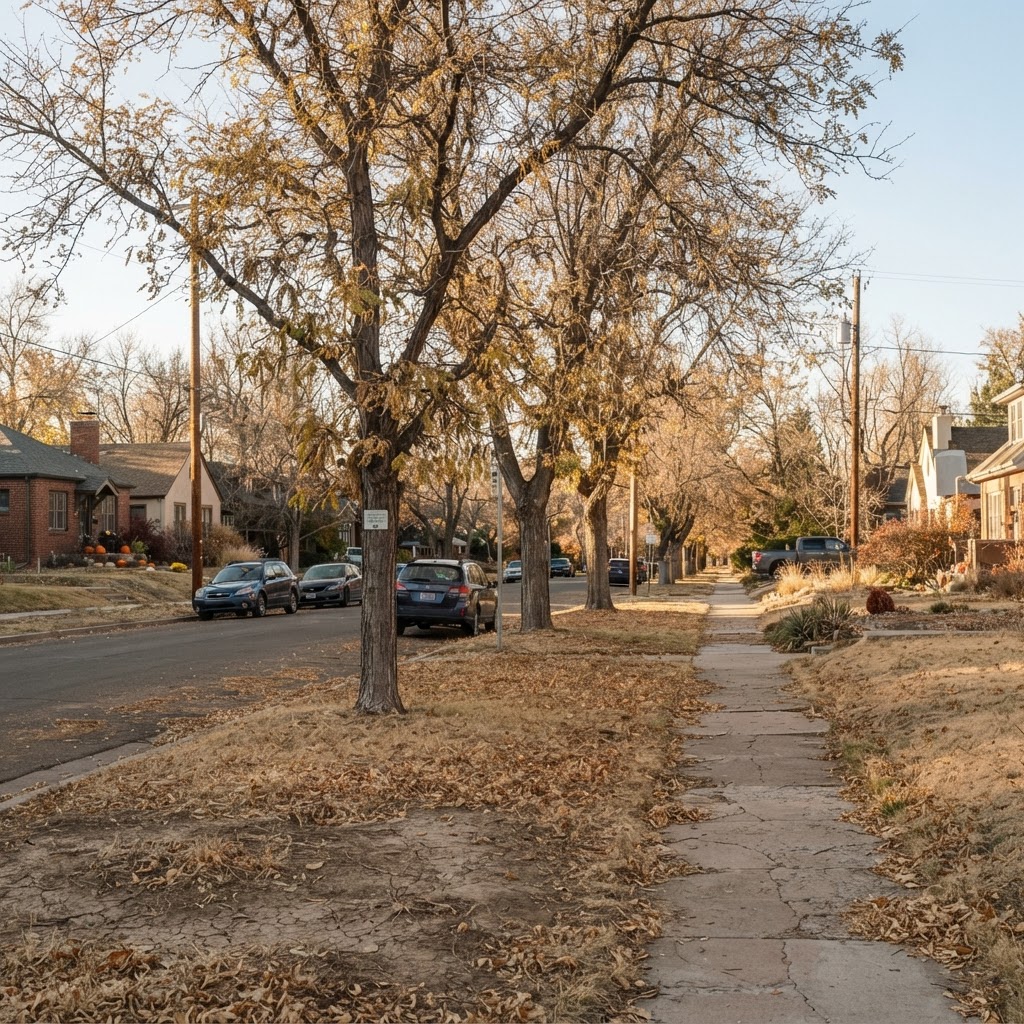
Following an exceptionally hot, dry summer, severe autumn drought is causing acute tree stress, premature defoliation, and root vulnerability across the Front Range. With Denver Water prohibiting automated lawn spray irrigation as of October 1, the City Forester urges residents to maintain targeted winter watering. Stewards should apply slow, deep soakings using drip systems, soaker hoses, or hand-watering around the critical drip line once or twice a month during warm, dry spells when temperatures stay above freezing. For new or replacement plantings resilient to regional semi-arid conditions, the City and County of Denver strongly recommends native and drought-hardy canopy species such as Hackberry (Celtis occidentalis) or Chinkapin Oak (Quercus muehlenbergii).
Volunteer & Planting
No new formal public volunteer planting dates were announced for today, as the primary municipal planting season typically slows down past October in Denver. Stewards and residents seeking winter education and free or low-cost tree programs for the upcoming spring season are encouraged to connect with The Park People's canopy initiatives or review available right-of-way planting permit guidance with the Denver Office of the City Forester.