City Intelligence · 11/22/2026
Canopy Daily · Nov 22: Denver Forestry Eyes Strategic Code Updates as Conifers Face Winter Insect Stress
The City and County of Denver is advancing Urban Forest Strategic Plan updates to enhance canopy protections and tree diversity standards. Meanwhile, arborists and residents are urged to monitor drought-stressed spruce trees vulnerable to Ips beetle decline heading into the late fall season.
Regulations & Permits
Work is underway on major updates to Denver Revised Municipal Code Chapter 57 and Tree Care Rules & Regulations, which propose introducing a Legacy Tree program, establishing tree diversity requirements, and expanding tree protections within setback areas during demolition and construction. Currently, permits remain mandatory and free of charge through the Office of the City Forester for any planting, pruning, removal, or chemical injection involving right-of-way and protected trees, with turnaround times averaging three to five business days. All commercial tree work must be conducted by contractors licensed under Chapter 57.
Community Concerns
Canopy equity remains a primary community concern, particularly across historically underserved, heat-vulnerable neighborhoods like Globeville, Elyria-Swansea, Valverde, and West Colfax. Through Denver's Equitable Community Tree Planting Initiative, over 1,850 trees have been planted on private residential lots to lower urban heat island impacts, and community partners are actively coordinating planning efforts to expand neighborhood outreach and plantings.
Ecosystem Challenge & Solution
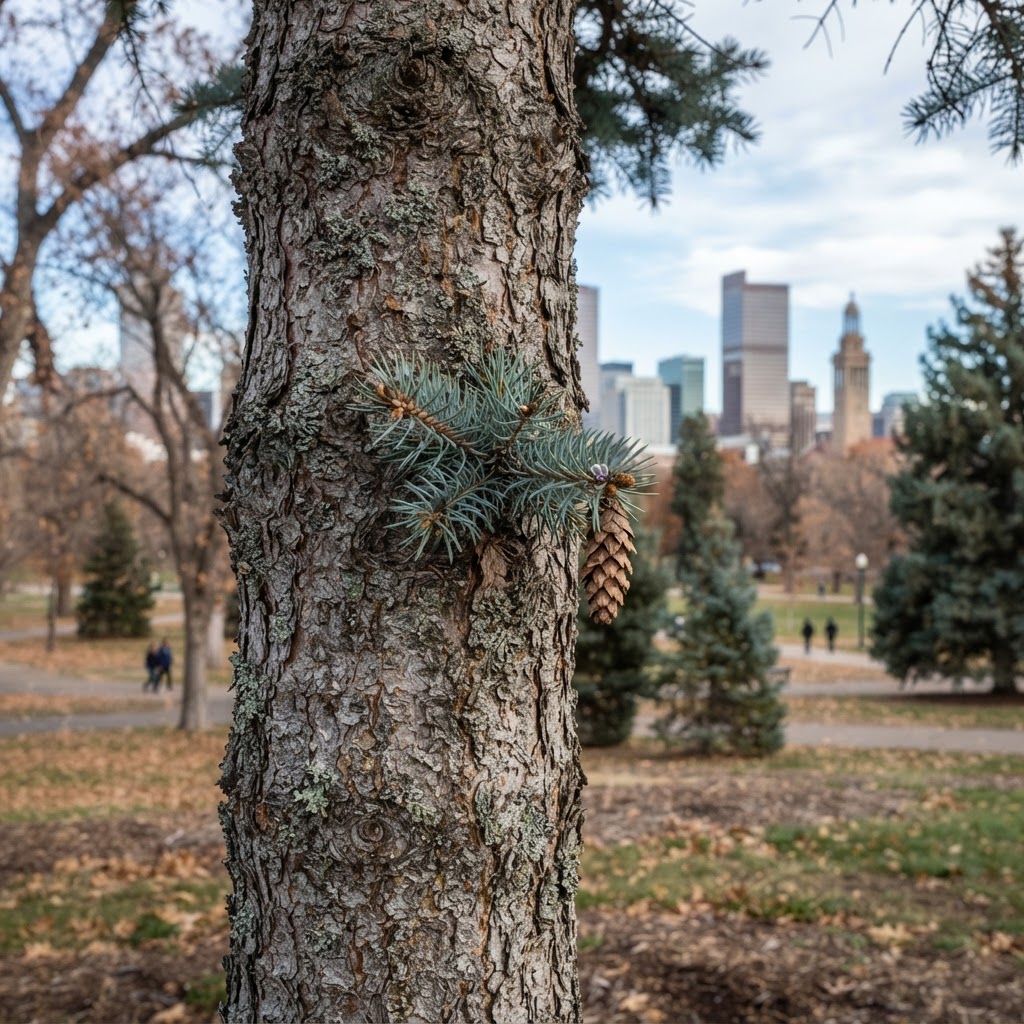
Prolonged dry conditions coupled with secondary pests have significantly impacted Denver conifers, with city foresters reporting elevated spruce removals linked to drought stress and Ips bark beetle infestations. To prevent conifer desiccation and beetle susceptibility, arborists advise monthly deep watering during dry, warm fall and winter spells when soil temperatures permit. For future plantings to bolster climate resiliency, the city recommends climate-adapted, drought-hardy native shade species such as the Hackberry (Celtis occidentalis) or Bur Oak (Quercus macrocarpa).
Volunteer & Planting
With fall planting concluded for the season, no active planting volunteer events were identified for late November. However, stewardship groups and residents can prepare for spring 2027 through The Park People's Denver Digs Trees program, which opens applications each January for free and low-cost street and yard trees. Year-round applications also remain open for eligible property owners to request free right-of-way street trees via the city's Be a Smart Ash program.