City Intelligence · 11/12/2026
Canopy Daily · Nov 12: Denver Advances Chapter 57 Forestry Code Revisions as City Forewarns on Late-Season Drought Stress
Denver city officials and council committees are moving forward with major revisions to Municipal Code Chapter 57, including a legacy tree program and developer tree fees. Simultaneously, arborists and residents are urged to maintain manual watering for canopy health following the end of seasonal spray irrigation under drought mandates.
Regulations & Permits
Denver's Office of the City Forester and City Council committees are reviewing sweeping updates to Denver Revised Municipal Code (DRMC) Chapter 57, driven by the Urban Forest Strategic Plan. Key proposed changes reported in Citizen Portal coverage include a formal owner-nominated 'legacy tree' preservation program, expanded authority to mandate consulting arborists during redevelopment, and a $1,600 per-tree payment-in-lieu benchmark when required street trees cannot physically be planted. In operational field work, the Office of the City Forester reminds contractors that free street tree permits remain strictly mandatory before performing any removal, planting, or chemical trunk injections on public right-of-way trees.
Community Concerns
Local canopy equity and downtown tree preservation remain active points of discussion. During council committee reviews of the proposed Chapter 57 code revisions, councilmembers highlighted equity impacts and implementation safeguards regarding developer fees and canopy coverage. Meanwhile, commercial property owners and urban stewards in central districts are continuing to utilize the city-backed Urban Forest Initiative through December 2026, which provides 50% cost-share grants and project management to construct expanded right-of-way tree beds and remediate restricted rooting environments.
Ecosystem Challenge & Solution
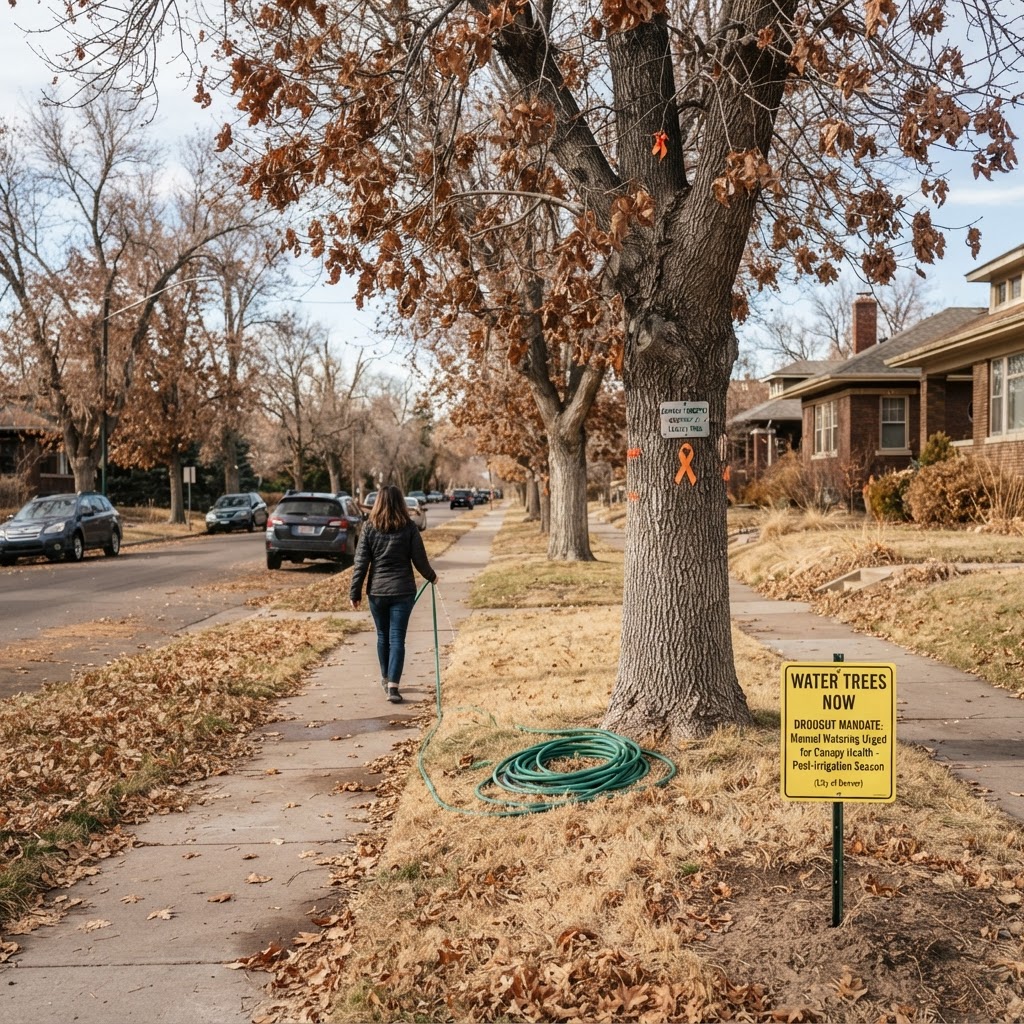
Denver's urban canopy faces severe lingering moisture stress following summer heat and Denver Water drought mandates, which enacted a complete ban on lawn spray irrigation starting October 1. Because signs of drought stress can take multiple seasons to surface, City Forester Luke Killoran advises property owners and tree stewards that targeted hand-watering, soaker hoses, or deep-root needles at the tree's drip line remain fully permitted and critical through dry autumn and winter spells. For long-term resilience against climatic extremes and regional pests like the Emerald Ash Borer, forestry officials recommend planting tough, drought-tolerant native-compatible species such as the Chinkapin Oak (Quercus muehlenbergii) or Kentucky Coffeetree (Gymnocladus dioicus).
Volunteer & Planting
No new municipal volunteer tree planting events were announced for this week as the late-autumn planting window closes across the Front Range. Community members seeking seasonal stewardship opportunities can look ahead to spring distributions via the city's 'Be a Smart Ash' and 'Denver Digs Trees' programs, while regional forest health thinning permits ($20) are currently available via the U.S. Forest Service on Recreation.gov for permitted holiday tree cuts in neighboring Pike National Forest.