City Intelligence · 11/12/2026
Canopy Daily · Nov 12: LA County Opens Oak Tree Ordinance Review as Urban Canopy Spacing and Root Mandates Spark Debate
Arborists and tree stewards across Los Angeles County are navigating major regulatory shifts following the release of an updated Oak Tree Permit Ordinance draft and pending public hearings. Concurrently, community advocates are calling for reforms to restrictive right-of-way spacing guidelines and root barrier mandates that threaten equitable street planting.
Regulations & Permits
Los Angeles County Department of Regional Planning officially released its Preliminary Draft updating the LA County Planning Oak Tree Program ordinance on October 29, 2026, opening a formal public review period that runs through the end of 2026. The draft proposes comprehensive updates to Chapter 22.174, addressing tiered permitting, encroachment into protected dripline zones, design-to-minimize impacts, and mitigation replacement schedules. An official public informational hearing via Zoom is scheduled for Wednesday, November 18, 2026, from 6:00 to 8:00 p.m. In the City of Los Angeles, tree care professionals are reminded that under LAMC 62.162 and 62.169, any work involving removal, pruning, or root pruning of street trees in the public right-of-way requires a permit issued by the Urban Forestry Division of StreetsLA.
Community Concerns
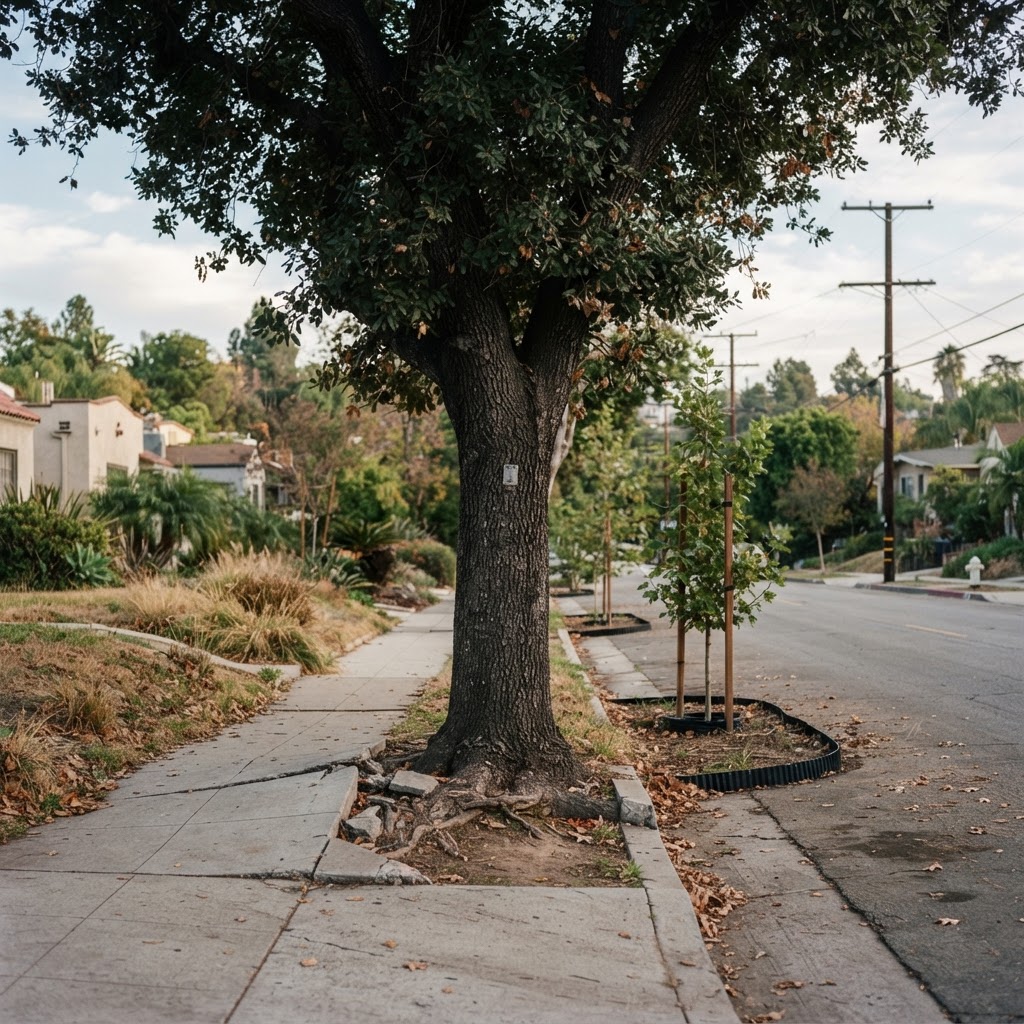
Local canopy equity advocates are rallying around two significant right-of-way policy battles. The South LA Tree Coalition and urban researchers have pressed the City Council under Council File 26-1050 to modernize overly restrictive street tree spacing guidelines, which currently enforce larger setbacks from streetlights, intersections, and driveways than peer California cities and suppress shade in heat-vulnerable transit corridors. Meanwhile, a coalition of nonprofit tree planters, including North East Trees under Council File 25-0974, is urging councilmembers to suspend universal enforcement of Standard Plan S-456-2 root barrier mandates on nonprofit plantings. Advocates warn that enforcing uniform root barriers in small parkways could derail thousands of planned plantings across lower-canopy districts due to prohibitive costs and potential long-term root constriction.
Ecosystem Challenge & Solution
As autumn transitions into winter, newly planted and establishing urban trees face critical root-establishment stress amidst unpredictable rainfall cycles and prolonged soil dryness across Southern California's degraded soils. Compounding this, improper deep-root development often leads to surface root upheaval or structural vulnerability during late-winter windstorms. Arborists recommend transitioning supplemental watering regimes toward deep, slow-percolation soakings around the dripline rather than frequent shallow irrigation, combined with a 3- to 4-inch layer of organic, uncompacted coarse mulch kept clear of the root flare. For urban parkways and restoration sites needing climate resilience and root stability, native species like the Coast Live Oak (Quercus agrifolia) or California Sycamore (Platanus racemosa) remain prime recommendations when paired with adequate root zones.
Volunteer & Planting
No specific newly scheduled single-day planting events were announced for this immediate weekend; however, ongoing municipal stewardship programs remain active. Free native oak seedlings continue to be available to the public by appointment through the Los Angeles County Fire Department Forestry Division nurseries, including the Malibu Forestry Unit, to support localized restoration. In the City of Los Angeles, neighborhood councils and City Plants partners continue coordinating site scouting and logistics for upcoming seasonal plantings, with community members encouraged to monitor the LA County Planning Oak Tree Program updates and submit commentary ahead of the November 18 virtual session.