City Intelligence · 11/9/2026
Canopy Daily · Nov 9: Seattle Launches New Tree Information Form as Regional Tree Code Reviews Continue
The Seattle Department of Construction and Inspections has rolled out a new Tree Information Form and trial portal ahead of mandatory 2027 permit rules. Meanwhile, King County arborists and stewards are active with tree equity efforts and autumn stewardship opportunities across the region.
Regulations & Permits
On November 3, 2026, the Seattle Department of Construction and Inspections (SDCI) released a new Tree Information Form (TIF) and announced training webinars starting November 16, 2026, to help permit applicants navigate tree-tracking compliance before it becomes mandatory on January 4, 2027, as detailed in New Tree Information Form and Training Now Available. This follows ongoing enforcement of Ordinance No. 127300 under SMC Chapter 25.11, which standardizes Tree Protection Area calculations and limits Tier 2 removals on development sites according to Seattle’s Tree Protection Regulations. Regionally, the Redmond Planning Commission held a study session on November 4, 2026, reviewing draft updates to RZC 21.72 Tree Protection regulations, with recommendations scheduled for November 18, 2026, as documented in the Redmond Tree Regulations Update Memo. No new Environmentally Critical Area (ECA) rule revisions or fee adjustments were reported this week.
Community Concerns
Local advocacy organizations such as Tree Action Seattle continue to push for structural urban forestry reforms, calling for an independent Urban Forestry Division to streamline enforcement currently split across multiple city departments. Community advocates also express ongoing concern over canopy loss permitted during private property redevelopment under the updated tree ordinance and are closely monitoring the Office of Planning & Community Development's Comprehensive Plan language. In tandem, the City of Seattle highlighted its ongoing collaboration with community partners to finalize the upcoming Tree Equity Plan, designed to tackle canopy deficits in historically underserved areas like the Chinatown-International District and Beacon Hill, as shared in Greenspace.
Ecosystem Challenge & Solution
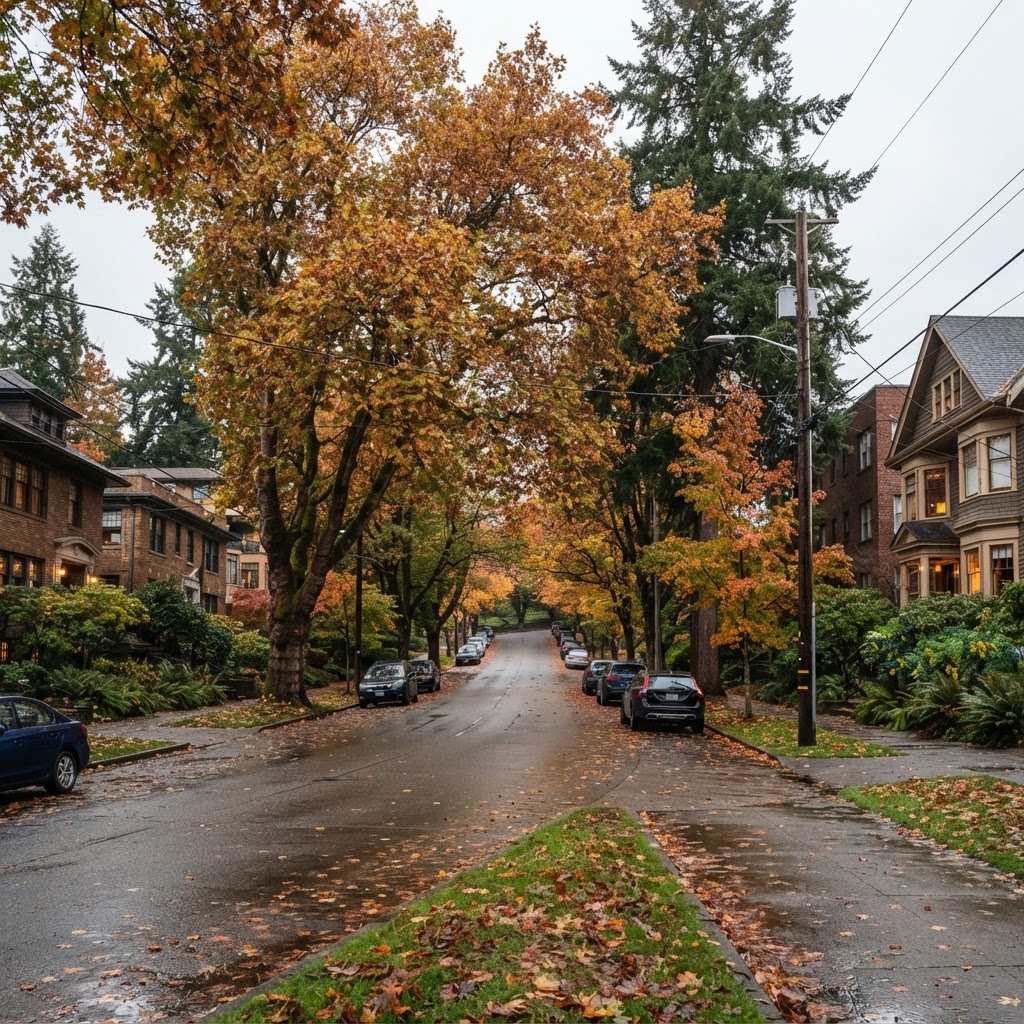
With November bringing intense Pacific Northwest autumn windstorms and rain, waterlogged soils pose an acute risk for root-plate failure, limb drop, and soil compaction across western King County urban sites. Arborists and stewards should prioritize structural pruning, clearing saturated leaves from root collars, and mulching root zones to a 2- to 4-inch depth keeping mulch away from trunks to regulate moisture and stabilize soil biology. For replanting in moist lowland or riparian-adjacent sites, consider planting western redcedar (Thuja plicata) or Pacific willow (Salix lucida subsp. lasiandra), both of which tolerate wet seasonal soils and support native storm mitigation.
Volunteer & Planting
November marks the peak of autumn planting and Seattle Forest Week stewardship across regional parks and greenbelts, with urban forestry initiatives engaging volunteer teams in tree installations and habitat restoration as highlighted by the City's Foresting Seattle program. Volunteers are encouraged to consult local partners such as the Green Seattle Partnership for scheduled weekend trail, mulching, and planting events across city green spaces; no other specific new planting dates were formally posted today.