City Intelligence · 11/7/2026
Canopy Daily · Nov 7: Olympia Weighs Downtown Canopy Shift as Urban Forest Planning Advances
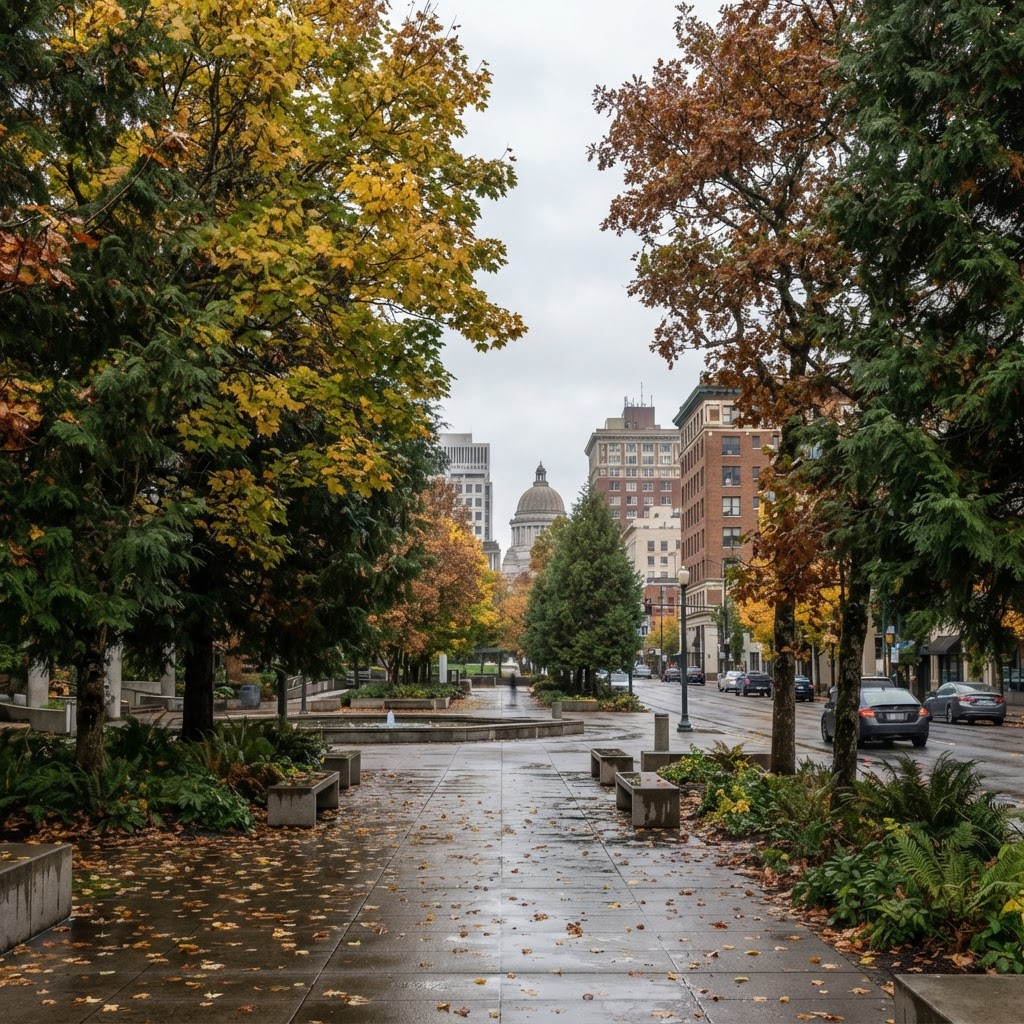
Olympia planners and county officials continue advancing code frameworks under the Urban Forest Management Plan and Critical Area updates, requiring clear professional oversight for hazard removals. Meanwhile, community attention remains fixed on downtown sidewalk-driven tree replacements and the preservation of historic South Sound Garry oaks.
Regulations & Permits
In Olympia and broader Thurston County, regulatory focus centers on developing the comprehensive Urban Forest Management Plan, which aims to revise overdue tree-protection codes, align with NPDES Phase II stormwater permits, and equitably manage the city's 42% canopy cover. Meanwhile, the Olympia Planning Commission has forwarded recommended revisions to the Critical Area Ordinance (CAO), clarifying wetland and stream buffers that may mandate site assessments by qualified professionals. In unincorporated Thurston County, tree-cutting regulations require a Critical Area Review Permit (CARP) for removing hazard trees or cutting within critical area buffers, typically necessitating formal Tree Risk Assessments by qualified arborists, as well as Forest Lands Conversion Permits prior to clearing sites for development.
Community Concerns
Canopy preservation remains a sensitive topic across Thurston County. Following sidewalk repair projects along Fourth Avenue and Washington Street in downtown Olympia that required removing 26 mature street trees, residents expressed concern over lost shade and street aesthetics. Although the city committed to a 'no net loss' replacement policy, some replantings had to be relocated to Columbia Street due to awning clearances. Regional concern also surrounds historic trees; in adjacent Tumwater, the City Council and Historic Preservation Commission addressed ongoing stabilization, root treatments, and pruning permits for the historic Davis Meeker Garry oak after branch failures sparked debates over public safety and conservation funding.
Ecosystem Challenge & Solution
Autumn in the Puget Sound brings saturating rains and windstorms that expose root rot and structural vulnerabilities in aging, dense stands, while historical overreliance on uniform tree stock heightens vulnerability to pests and disease. To prevent catastrophic canopy loss, regional arborists emphasize structural pruning, root zone aeration, and diversifying planting corridors to avoid single-species monocultures. For November planting, Garry oak (Quercus garryana) is an ideal native choice; this drought-tolerant, wind-firm cornerstone species thrives in Thurston County's gravelly outwash soils and supports critical regional biodiversity.
Volunteer & Planting
No specific newly scheduled volunteer planting events or stewardship work parties were published in official announcements for today. Tree stewards and residents are encouraged to monitor ongoing volunteer programs through City of Olympia Parks, Stream Team Thurston, and local conservation district work parties as the fall planting season continues.