City Intelligence · 11/24/2026
Canopy Daily · Nov 24: Beaverton Braces for Emerald Ash Borer as Urban Canopy Planning Encounters Resource Gaps
Following official confirmations of the emerald ash borer within Beaverton limits, urban forestry teams are intensifying targeted treatments and native plantings. At the same time, community advocates and city officials are grappling with funding delays for comprehensive tree protections and master planning.
Regulations & Permits
No new fee revisions or emergency tree permit amendments were enacted this week; the Beaverton Code remains current through Ordinance 4883 as published in the Beaverton Municipal Code. However, tree stewards should note that broader overhauls of the city's tree preservation rules remain stalled; recent discussions before the Beaverton Planning Commission highlighted weaknesses in significant-tree protections, but staffing and budget shortfalls continue to delay a comprehensive code update. Additionally, property owners working along roadways must adhere to Section 5.05.098, which strictly prohibits hazardous trees and mandates clearances of 8 feet over pedestrian sidewalks and 10 feet over vehicular roadways.
Community Concerns
Canopy preservation and urban wildlife coexistence remain major focal points for residents. The Beaverton Climate Action Plan Dashboard recently flagged Strategy 12.1—the expansion and strengthening of tree canopy through the Urban Forestry Master Plan—as delayed due to lack of funding and municipal capacity. Meanwhile, residents along urban waterways like Fanno Creek are navigating neighborhood coexistence with expanding wildlife; a recent Portland State University study surveyed local attitudes toward urban beavers under Oregon's revised wildlife regulations, balancing creek restoration against concerns over localized tree loss and flooding.
Ecosystem Challenge & Solution
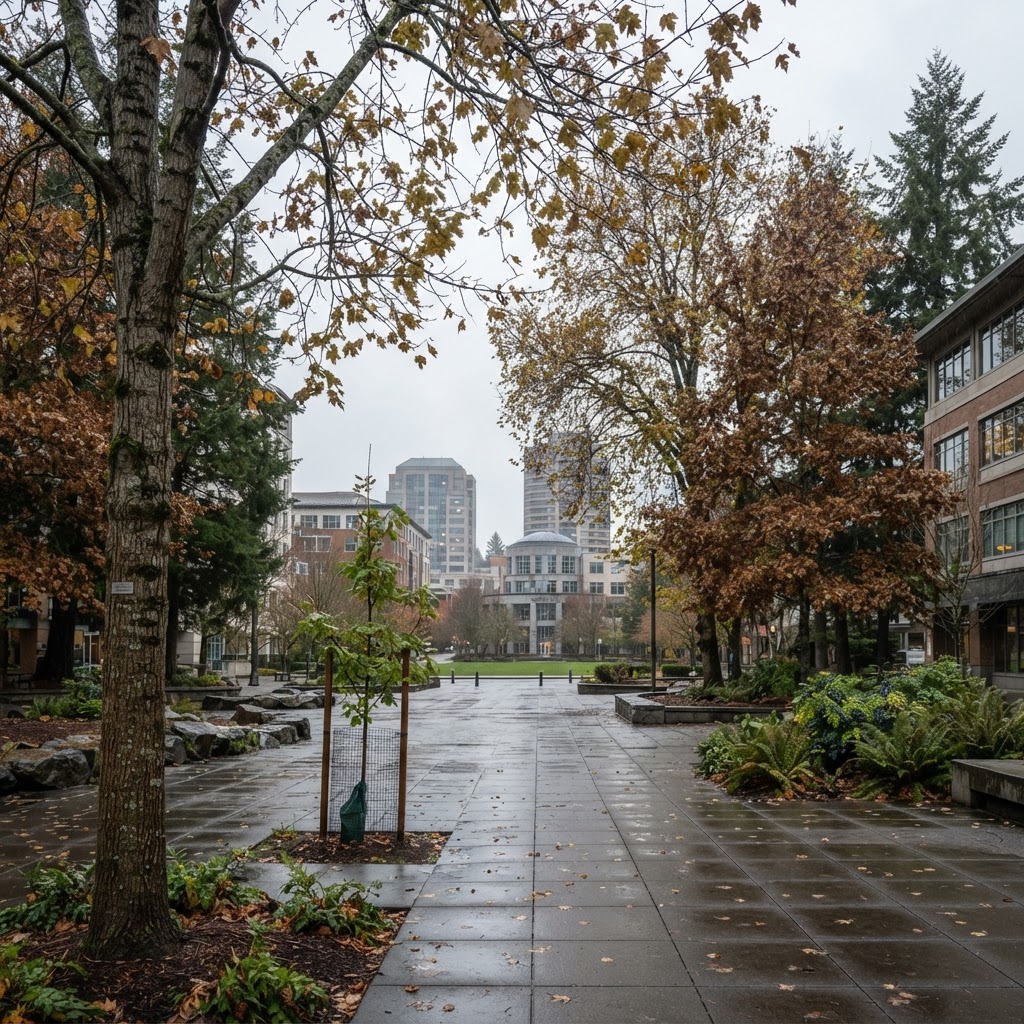
The emerald ash borer (EAB) poses an immediate seasonal and long-term threat after state and city officials confirmed the invasive beetle inside city boundaries, including at Greenway Park, as noted in the Oregon Department of Forestry Bulletin. With roughly 99 percent of untreated native Oregon ash trees vulnerable to mortality, the City of Beaverton Urban Forestry has responded by applying protective trunk-injection treatments to prioritized high-value specimens, treating 600 street trees alongside 22 mature natural-area trees. To build resilient canopy buffers, arborists recommend halting new ash plantings and replacing lost canopy with diverse, moisture-tolerant native species like Oregon white oak (Quercus garryana) or bigleaf maple (Acer macrophyllum).
Volunteer & Planting
No new public volunteer planting dates were announced this week. Recent municipal efforts have actively mobilized non-profit partnerships to offset pest losses, including work with Friends of Trees to plant 60 street trees and municipal installations of over 2,000 native trees and shrubs across Beaverton's natural areas, detailed on the City of Beaverton Urban Forest Blog. In parallel, the Beaverton Downtown Association is seeking community volunteers for habitat planting and educational outreach tied to its newly established downtown Pollinator Pathway and Bee City USA initiative, reported by the Beaverton Beat.