City Intelligence · 11/24/2026
Canopy Daily · Nov 24: Vancouver Rolls Out 3,000-Tree Expansion as Stanley Park Enters Final Looper Response Stage
Vancouver has launched a massive street tree planting blitz targeting low-canopy neighbourhoods for the 2026-2027 season, backed by federal and municipal funding. Meanwhile, forest managers and arborists continue critical insect mitigation and restoration work in Stanley Park alongside active private tree protection enforcement.
Regulations & Permits
Under the City of Vancouver’s Protection of Trees By-law 9958, arborists and property owners are reminded that a permit is required to remove any private tree measuring 20 cm or greater in diameter at 1.4 metres above ground, as well as designated replacement trees. Tree permit fees remain adjusted under By-law No. 14546 at $113 for the first tree in a 12-month period and $324 for each subsequent tree (Metro Vancouver Tree Bylaw Changes, 2025–2026, BC). On development and construction sites, strict barrier inspection clearances apply before permits are released, and boulevard trees may not be disturbed or pruned without prior Park Board written approval.
Community Concerns
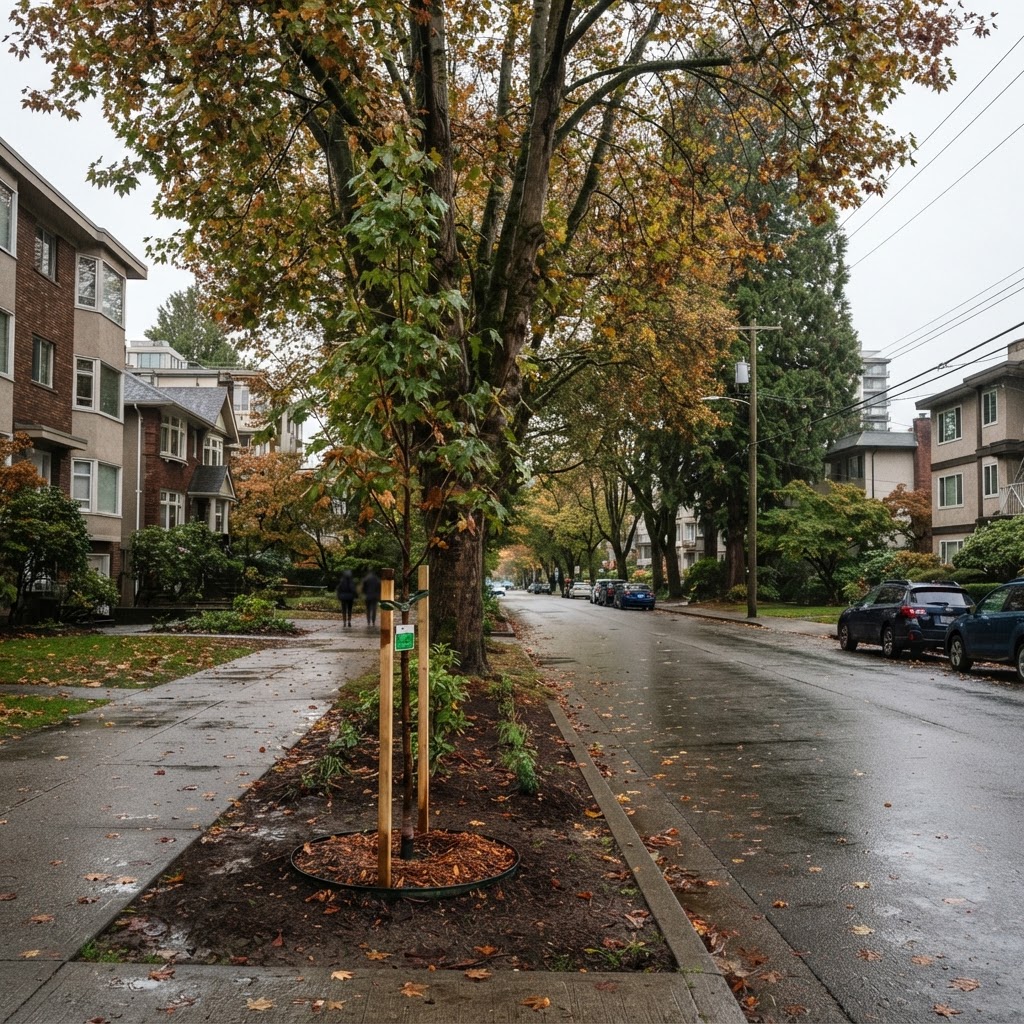
Canopy equity across neighbourhoods remains a central concern as the city works toward its goal of achieving 30% urban forest cover by 2050 (Street tree canopy expansion). Residents in areas historically burdened by heavy pavement and limited soil volumes have voiced strong demand for shade and urban heat reduction. In response, contractor Lee’s Trees Ltd. has commenced planting work on residential streets, accompanied by short-term parking restrictions and boulevard adjustments to integrate larger canopies into underserved neighbourhoods (Tree planting on your street).
Ecosystem Challenge & Solution
Vancouver’s urban forest continues to manage the severe aftermath of western hemlock looper outbreaks, which heavily damaged mature conifers across Stanley Park and heightened seasonal storm windthrow and fire vulnerabilities (Board Briefing Memo - Stanley Park - Hemlock Looper Response Update). The operational solution involves selective removal of dead and hazardous trees alongside aggressive replanting with ecologically resilient native species. Recommended native selections include Douglas fir (Pseudotsuga menziesii), Western red cedar (Thuja plicata), Sitka spruce (Picea sitchensis), and Pacific yew (Taxus brevifolia), which together enhance stand diversity and resistance to future climatic and insect pressures.
Volunteer & Planting
The City of Vancouver and the Vancouver Board of Parks and Recreation have kicked off a major street tree planting program spanning November 2026 through December 2027 to plant over 3,000 street trees and install 50 engineered tree pits (Street tree canopy expansion). While official hands-on volunteer community plantings are currently transitioning to spring scheduling, residents can actively steward canopy growth immediately through the Park Board's ongoing Adopt-a-Tree program, which helps ensure newly planted boulevard trees receive vital watering and post-establishment care.