City Intelligence · 11/24/2026
Canopy Daily · Nov 24: Redmond Advances Comprehensive Tree Code Overhaul as Late-Autumn Windstorms Test Canopy Health
Following recent November Planning Commission sessions on the draft RZC 21.72 Tree Code overhaul, Redmond is moving closer to modernized standards including third-party reviews and enhanced tree viability metrics. Arborists and landowners are concurrently addressing seasonal storm hazards, root-zone saturation, and ivy proliferation ahead of winter.
Regulations & Permits
The Redmond Planning Commission is finalizing recommendations on the comprehensive Tree Code Update (RZC 21.72 and RZC 21.78 definitions). Recent November study sessions endorsed significant changes affecting arborists and contractors: establishing an optional third-party review track for tree removal permits, requiring formal planning verification that replacement trees have been installed, standardizing 6-foot chain-link fencing for active tree protection zones, and prohibiting the removal of landmark and heritage trees without strict exception approval. Additionally, proposed permit submittal standards (RZC 21.72.140.B) incorporate rigorous 'tree viability' criteria evaluating tree health and structure both currently and post-construction. Final Planning Commission approval is scheduled for December ahead of anticipated City Council adoption in early 2027.
Community Concerns
Local tree advocates and commissioners continue to debate tree replacement parity and canopy trends as Redmond targets a 40% long-term canopy coverage from its measured 37% baseline (Redmond Issues Matrix). Residents and commissioners have pressed city planners to prioritize off-site replacement plantings within the specific neighborhoods where canopy was lost, while raising concerns regarding the complexity of proposed tree credit retention rules for small-scale residential developments. Community input has also emphasized the necessity of low-income fee-subsidy options for hazardous tree removals and mandatory replacements even when significant hazard trees are removed.
Ecosystem Challenge & Solution
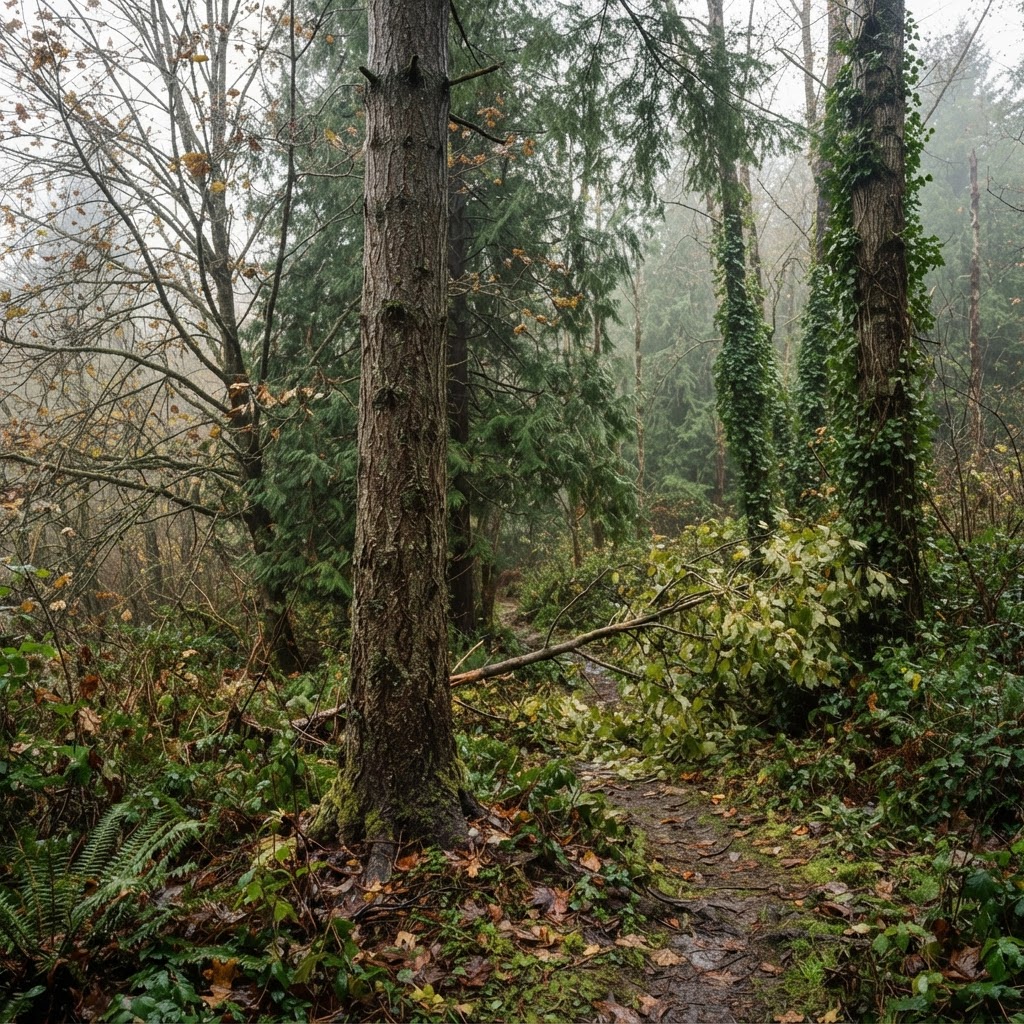
Late-November weather patterns bring heavy rainfall and windstorms, exposing structural vulnerabilities in saturated soils where non-native invasive English ivy (Hedera helix) adds heavy weight and wind sail to mature canopies. As highlighted under municipal vegetation maintenance standards (RZC 21.72 Draft), property owners are responsible for clearing invasive vines from regulated trees using safe 'lifeline' cut-and-roll techniques that avoid wounding bark. To restore wet, wind-exposed understories and stabilize slopes, arborists recommend planting wind-firm, moisture-tolerant Pacific Northwest natives such as Western Redcedar (Thuja plicata) or Douglas Spiraea (Spiraea douglasii).
Volunteer & Planting
No specific newly scheduled volunteer restoration work parties or public planting workdays were announced in the municipal docket for this week. Community members and tree stewards interested in canopy enhancement are encouraged to review draft updates and submit public comments through the city's active Let's Connect Redmond Trees Portal.