City Intelligence · 11/24/2026
Canopy Daily · Nov 24: Kirkland Canopy Daily: Navigating Urban Forest Mandates and Late-Autumn Soil Resilience
As discussions around the 2026 Urban Forest Management Plan highlight the tension between state housing mandates and tree retention, Kirkland professionals must maintain strict compliance with Chapter 95 tree codes. Late November brings saturated Pacific Northwest soils and seasonal windstorms, underscoring the critical need for root protection and thoughtful native plantings.
Regulations & Permits
Under Kirkland Zoning Code Chapter 95.34, single-family and middle-housing developments are required to meet a minimum tree density of 50 credits per acre. Authorized removals of landmark trees require a 3:1 mitigation ratio using approved large species under KZC 95.23, accompanied by a recorded 5-year maintenance agreement or a fee-in-lieu payment of $450 per required tree credit. Arborists and contractors are reminded that per KZC 95.32 and Kirkland Municipal Code 1.12.100, active construction sites must maintain six-foot chain-link Tree Protection Zone (TPZ) fencing with posted signage every 15 feet; unpermitted root zone incursions or tree removals carry steep penalties ranging up to $20,000 to $30,000 per landmark tree.
Community Concerns
Public discourse surrounding the 2026 Urban Forest Management Plan Update remains focused on canopy loss, following data indicating Kirkland's canopy declined from 40% to approximately 38%, with the steepest losses in single-family residential zones. Neighborhood groups like the Finn Hill Neighborhood Alliance have formally expressed concern over preserving canopy in the face of state middle-housing mandates and infill construction, while building industry representatives advocate for flexible, data-driven policies that balance environmental preservation with regional housing goals.
Ecosystem Challenge & Solution
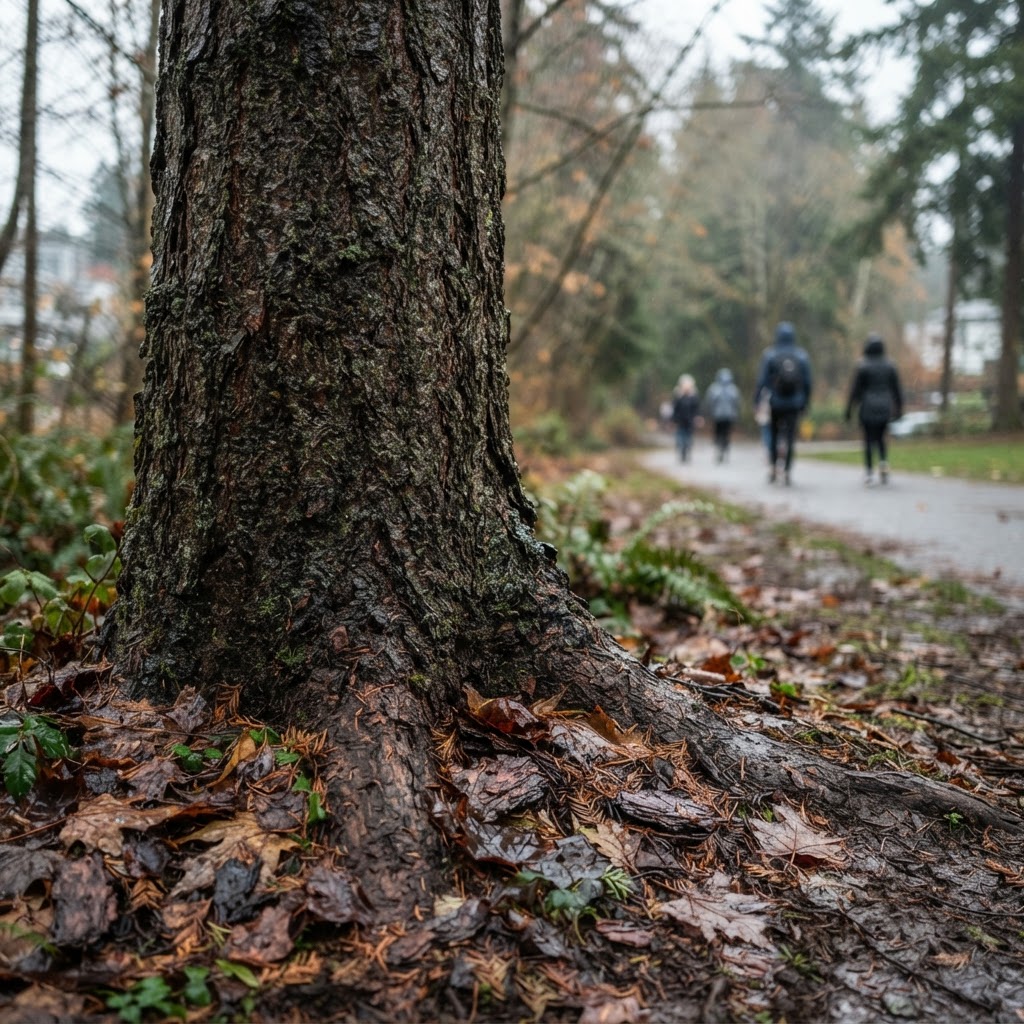
Late-autumn conditions in the Puget Sound bring heavy rains that cause soil saturation and compaction, elevating the risk of root shear and windthrow during seasonal storm events. In development corridors and landscaped lots, arborists should enforce strict non-entry TPZ boundaries and apply 2 to 4 inches of coarse arborist wood chip mulch outside the root flare to buffer soil compaction and regulate root moisture. When specifying replacement conifers for damp, winter-wet soils, plant native western redcedar (Thuja plicata) or Douglas-fir (Pseudotsuga menziesii), ensuring planting occurs during the optimal October-to-April planting window defined in KZC 95.50.
Volunteer & Planting
No specific public volunteer planting events were announced by the City for today, November 24, 2026. However, fall through early spring represents the primary planting window under local development code, and community stewards are encouraged to monitor the City of Kirkland and Green Kirkland Partnership portals for upcoming winter habitat restoration work parties.