City Intelligence · 11/23/2026
Canopy Daily · Nov 23: Vancouver Advances Winter Street Plantings as Stanley Park Risk Mitigation Nears Completion
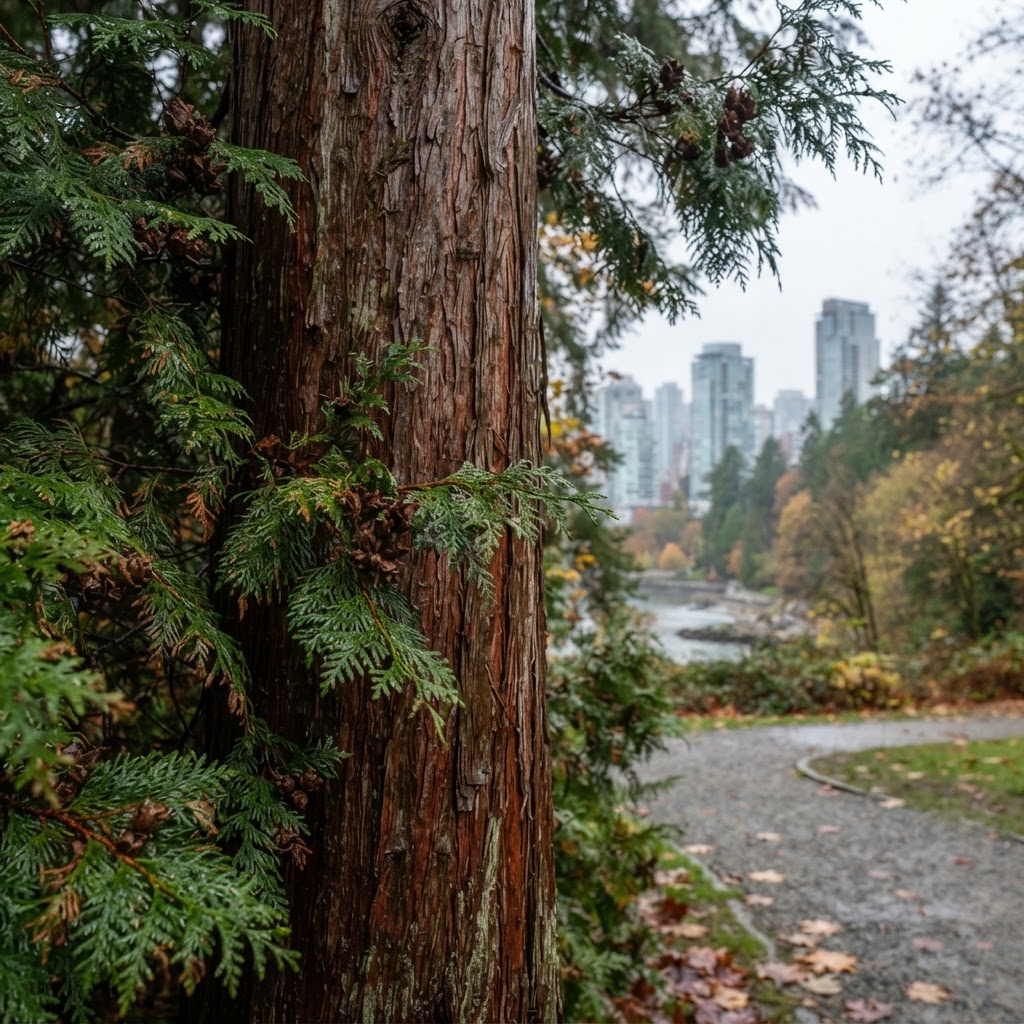
Vancouver arborists are navigating established private tree removal thresholds under Protection of Trees By-law No. 9958 alongside active winter planting initiatives across low-canopy neighbourhoods. In Stanley Park, Phase 3 looper moth response removals are scheduled to conclude by mid-December 2026, setting the stage for extensive native restoration planting.
Regulations & Permits
In Vancouver, private property tree removal remains regulated under Protection of Trees By-law No. 9958. A permit is mandatory to remove any tree with a diameter of 20 centimetres or greater measured at 1.4 metres above grade, as well as designated replacement trees. Under fee amendment By-law No. 14546 (effective since January 1, 2026), permit costs stand at $113 for the first tree in a 12-month period and $324 for each subsequent tree (Arborist Group). No new environmentally critical area (ECA) thresholds or bylaw revisions have been enacted this month; arborists on development sites must continue to submit arborist reports certifying tree condition and retain required tree densities per Schedule C.
Community Concerns
Community and advocacy attention continues to focus on public safety and ecosystem impacts tied to the Western hemlock looper mitigation in Stanley Park. Following a court ruling upholding Park Board decisions, Part 2 of Phase 3 hazard removals commenced in mid-October 2026 and is targeted for completion by mid-December 2026 (Vancouver Board of Parks and Recreation). Park advocates and environmental groups remain vigilant regarding canopy loss, while the Park Board emphasizes that removals are strictly limited to dead or hazardous trees, with coarse woody debris preserved on-site for habitat retention.
Ecosystem Challenge & Solution
A critical seasonal challenge facing Vancouver's urban canopy is soil compaction, root restriction, and winter storm saturation in heavily paved boulevards, compounded by past summer drought stress. To resolve this, the City of Vancouver is installing engineered tree pits using structural soil beneath sidewalks to allow deep rooting, stormwater absorption, and increased resilience (City of Vancouver). Practitioners and tree stewards are encouraged to plant climate-adaptive native species such as Douglas fir (Pseudotsuga menziesii) and Grand fir (Abies grandis), both of which tolerate seasonal moisture extremes once established.
Volunteer & Planting
The City of Vancouver Urban Forestry team is actively executing its November-to-April street tree planting window, utilizing Green Municipal Fund grants to plant 3,000 new boulevard trees across six priority low-canopy neighbourhoods through 2026–2027 (City of Vancouver). In Stanley Park, restoration efforts supported by Western Forest Products seedlings and local First Nations will see 25,000 additional seedlings planted in early 2027 (Vancouver Board of Parks and Recreation). While no public volunteer planting dates were announced for today, residents can support local canopy expansion by participating in the City's ongoing Adopt-a-Tree program.