City Intelligence · 11/23/2026
Canopy Daily · Nov 23: Redmond Advances Comprehensive Tree Code Overhaul as City Evaluates Canopy Loss
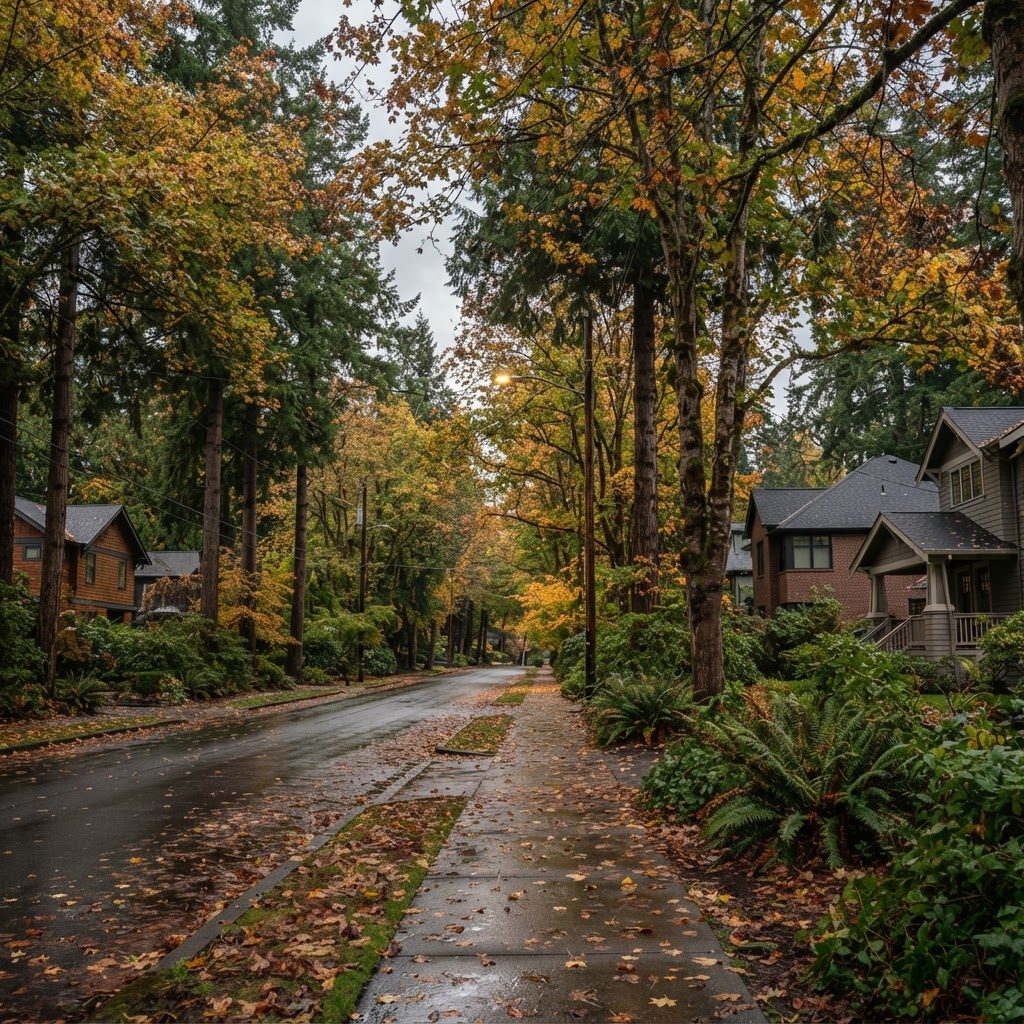
The City of Redmond Planning Commission is moving forward with key revisions to its tree protection regulations, targeting final committee recommendations in December ahead of planned City Council adoption in early 2027. Amid community concerns over declining tree cover and equitable planting capacity, officials and stewards are prioritizing neighborhood-level mitigation, strict landmark tree protections, and late-autumn storm resilience.
Regulations & Permits
The Redmond Planning Commission is finalizing major updates to RZC 21.72 (renamed Tree Regulations) alongside related definitions in RZC 21.78 and archaeological protections under RZC 21.30, targeting a final commission report approval on December 16, 2026, ahead of anticipated City Council adoption in early 2027 (Planning Commission Presentation). Under the latest Version 4 drafts, Landmark and Heritage tree removals remain prohibited unless granted an approved exception with scaled replacement ratios starting at three trees for a 30-inch DBH specimen plus one tree per additional three inches of DBH (Draft RZC 21.72 Tree Regulations). The updates mandate tree removal permits for non-emergency hazard trees, require planning staff verification that replacement plantings have been installed, expand civil penalties for unapproved removals or damaging practices like topping over 25 percent of the live crown, increase standard tree protection fencing to six-foot chain-link, and allow third-party arborist reviews during permit processing (Planning Commission Presentation, Draft RZC 21.72 Tree Regulations).
Community Concerns
Community discussions and Planning Commission study sessions highlight mounting anxiety regarding Redmond's current 37 percent canopy cover against the City's long-term 40 percent goal, with residents and commissioners pressing for stronger policies to counter development-driven losses (Planning Commission Issues Matrix). Key concerns focus on whether the proposed tree-credit system and fee-in-lieu programs rely on hypothetical future planting capacity rather than verified, plantable sites across urban heat islands and parks (Planning Commission Issues Matrix). In response, staff incorporated revisions prioritizing off-site replacement plantings within the specific neighborhood where removals occur, while also planning future evaluations to subsidize tree permit fees for qualifying low-income homeowners to address equity (Planning Commission Presentation, Planning Commission Issues Matrix).
Ecosystem Challenge & Solution
Late-autumn Pacific Northwest windstorms and saturated soils present acute hazards to canopy stability, stormwater infiltration, and root systems throughout Redmond. Saturated ground softens anchor roots, predisposing mature trees with preexisting structural defects or compromised Critical Root Zones to windthrow and failure. Property owners and arborists should conduct non-invasive visual risk assessments to check for root plate heaving, dead limbs, and co-dominant stems, and prioritize manual removal of invasive ivy and blackberry, which add heavy sail and moisture weight to tree crowns (Draft RZC 21.72 Tree Regulations). For long-term soil stabilization and wind firmness in Puget Sound lowlands, stewards should plant deeply rooted Pacific Northwest native conifers such as western redcedar (Thuja plicata) or Douglas-fir (Pseudotsuga menziesii) during the wet late-fall dormant window.
Volunteer & Planting
No specific newly scheduled volunteer work parties or public tree giveaways were published in current official updates for today's brief. However, the City of Redmond continues to rely on volunteer restoration and private planting incentive partnerships as core pillars of its Tree Canopy Strategic Plan (Planning Commission Issues Matrix). Community members and tree stewards can review ongoing tree code updates and submit feedback through the City's online engagement portal at Let's Connect Redmond.