City Intelligence · 11/23/2026
Canopy Daily · Nov 23: Bellevue Tree Codes Codified Amid Fall Stewardship Efforts
Bellevue continues implementing comprehensive tree protection and clearing standards following recent municipal code codifications in late 2026. Urban foresters and residents are focusing on autumn storm resilience, root protection, and tracking local canopy equity goals.
Regulations & Permits
Following the codification of Ordinances 6932 and 6934 in October 2026, Bellevue enforces strict requirements under LUC 20.20.900 and BCC 23.76. Clearing and grading permits are required for removing significant trees (minimum 6-inch diameter) or landmark trees (24 inches or greater) outside development, as well as pruning more than 25 percent of a preserved tree's live crown. Development proposals must maintain minimum tree density with plans certified by a Qualified Tree Professional, and mandatory replacement standards dictate planting one tree per significant tree removed, and three replacement trees (or two approved large conifers) per landmark tree under BCC 23.76.060.
Community Concerns
Community discussions center on meeting Bellevue's 40% tree canopy coverage goal, informed by data from the city's Tree Canopy Assessment showing a slight decrease to 39.3% cover, according to the City of Bellevue Community Development Department. Residents and advocates are actively utilizing the public TreePlotter Canopy Tool to examine neighborhood-level tree equity scores and identify geographic gaps where urban heat and development pressure disproportionately impact tree density.
Ecosystem Challenge & Solution
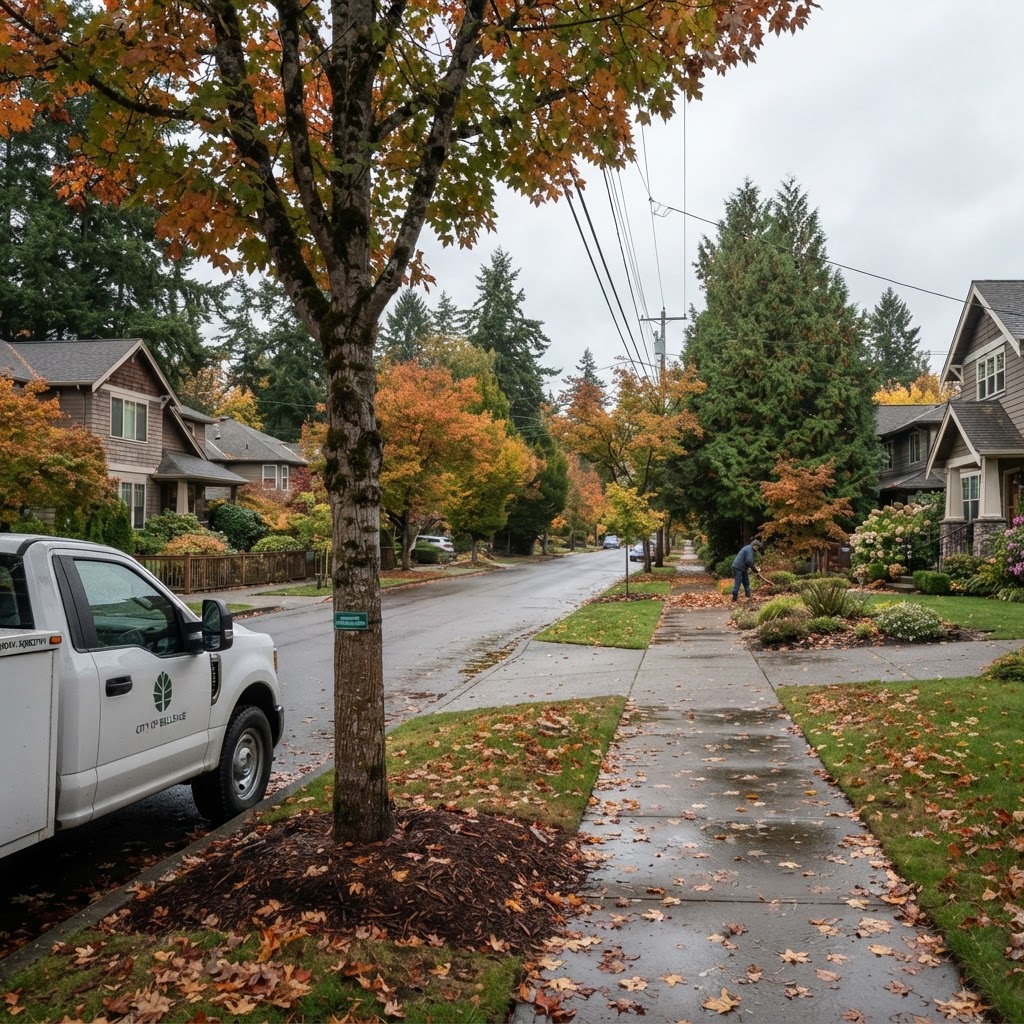
Late November brings Pacific Northwest windstorms and saturated soils that increase tree failure risks, especially in compacted urban environments. Arborists advise structural pruning by certified professionals to reduce wind resistance, clearing root collars of heavy wet debris, and establishing proper mulch rings to prevent soil compaction and runoff. For replacement or buffer planting, Western redcedar (Thuja plicata) and Douglas-fir (Pseudotsuga menziesii) remain primary native choices to anchor soils, mitigate stormwater, and withstand seasonal weather patterns.
Volunteer & Planting
While Bellevue's annual October tree distribution with partner organizations has concluded for the season as noted by the City of Bellevue Tree Giveaway Program, no new public volunteer planting dates are scheduled for this week. Tree stewards and residents are encouraged to maintain recently planted saplings through deep watering and mulching, while monitoring the Bellevue Parks and Community Development portals for upcoming winter restoration and invasive removal events.