City Intelligence · 11/23/2026
Canopy Daily · Nov 23: Brooklyn Canopy Brief: Bushwick Right-of-Way Plantings, Fall Permits, and Late-Autumn Tree Pit Preparation
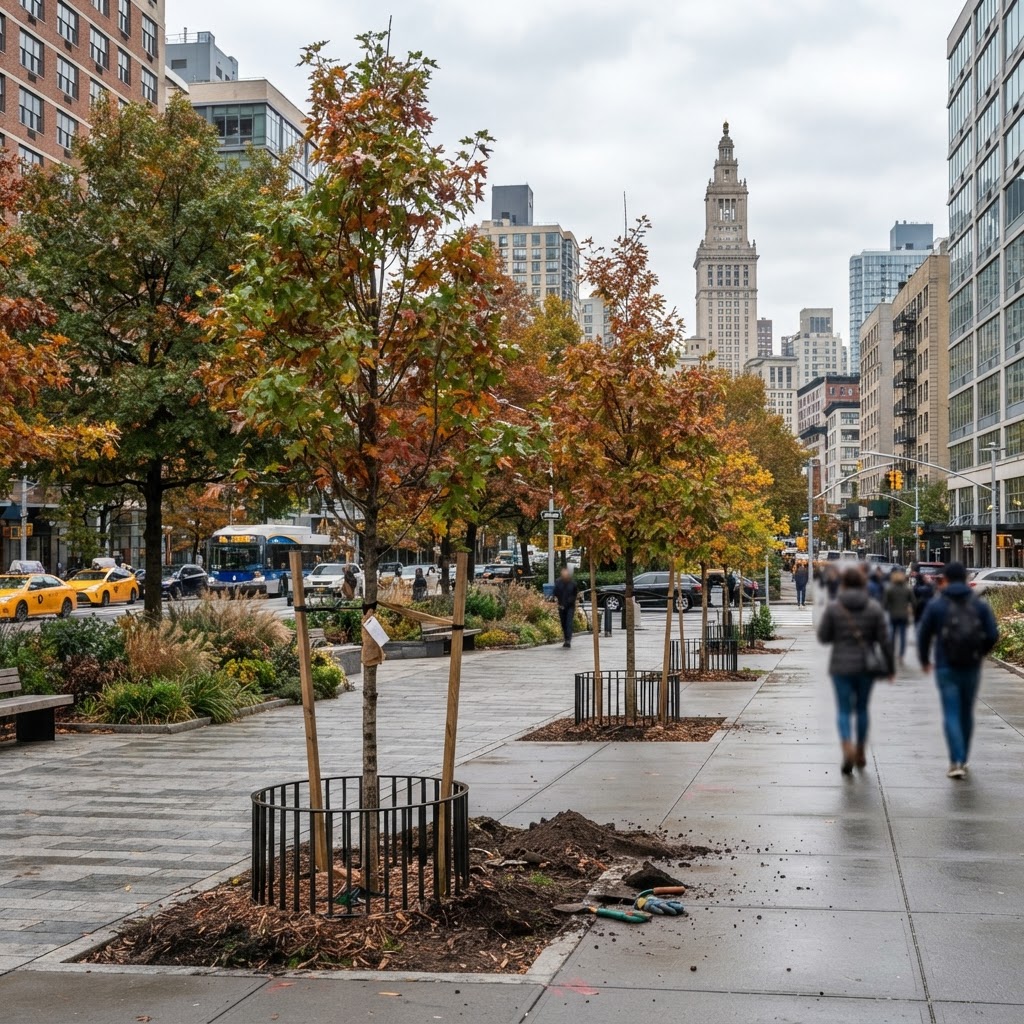
NYC Parks is moving forward with street tree installations across Kings County while reminding arborists and property owners that public right-of-way plantings cannot be refused. Tree stewards are focusing on late-fall root zone care, soil de-compaction, and monitoring for seasonal urban stressors as the autumn planting window approaches its permit cutoff.
Regulations & Permits
According to the Street Tree Planting Standards for New York City 2026, the fall tree planting season extends through December 31, but all planting permit applications must be submitted via the NYC Parks Tree Work Permit and Plan Review Application at least two weeks before season close (by December 15). Arborists and contractors working in Kings County must also note that tree bed excavations require a street opening permit from NYCDOT, and operations must adhere to seasonal DOT construction embargoes running from late November through early January. Healthy trees approved for removal in the public right-of-way continue to trigger mandatory replacement obligations and restitution standards.
Community Concerns
Canopy expansion efforts in Brooklyn have sparked local discussion as NYC Parks listed 174 Bushwick sites for new street trees, heavily concentrated along corridors such as Eldert Street and Bushwick Avenue. City officials have reaffirmed that street trees occupy the public right-of-way, meaning adjacent property owners cannot reject scheduled plantings. While some homeowners express concerns over sidewalk maintenance and space constraints, community forestry advocates and the agency emphasize that expanding the urban canopy is crucial for combating local heat-island effects in historically low-canopy neighborhoods.
Ecosystem Challenge & Solution
As Kings County heads into late autumn, urban trees face acute root vulnerability from heavy foot traffic, severe soil compaction in narrow tree pits, and incoming winter de-icing salts. Arborists recommend a practical late-season mitigation: gently aerating compacted topsoil without damaging root flares, expanding tree beds with approved permeable surfaces or structural soil where feasible, and applying a 2- to 3-inch layer of organic mulch while keeping it pulled back from the trunk. For resilient future street plantings capable of handling poor, compacted soils and urban stressors, foresters recommend planting tough native canopy species such as the Swamp White Oak (Quercus bicolor).
Volunteer & Planting
Ongoing urban forest stewardship opportunities remain accessible through the NYC Tree Map, where volunteers can register, record self-guided tree pit care, and sign up for citywide park tree measurement and survey efforts through Trees Count. In South Brooklyn, Kingsborough Community College and Trees New York are progressing on their multi-phase initiative to restore canopy lost to Superstorm Sandy across the Manhattan Beach campus. No additional public mass planting volunteer events were officially announced for Kings County for today's date.