City Intelligence · 11/22/2026
Canopy Daily · Nov 22: Redmond Advances Draft Tree Regulations Update Toward Final Commission Review
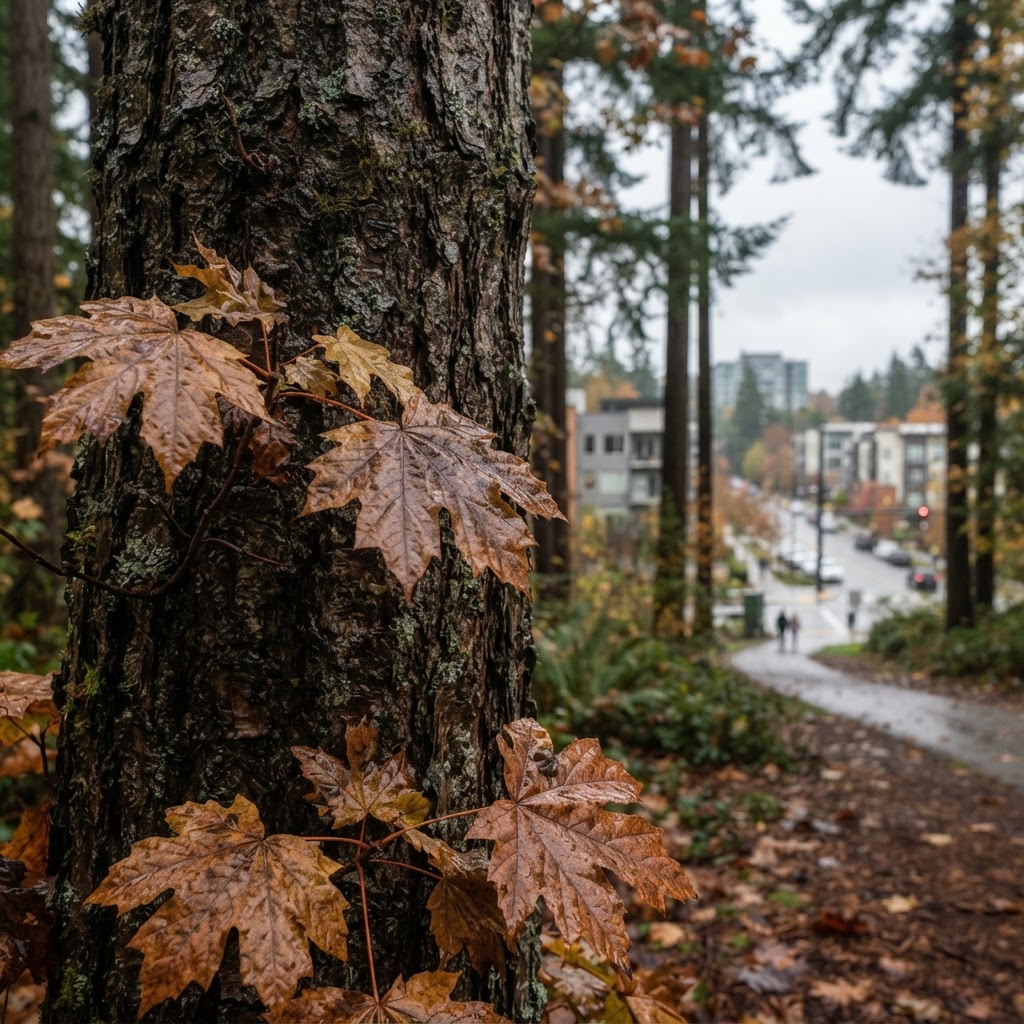
The City of Redmond is finalizing major draft revisions to its tree protection regulations (RZC 21.72) to balance urban growth with long-term canopy preservation goals. The Planning Commission is targeting approval of its recommendation report in December ahead of planned City Council consideration in early 2027.
Regulations & Permits
The City of Redmond is reviewing Version 4 of the draft Tree Regulations (RZC 21.72), transitioning the chapter from Tree Protection to Tree Regulations alongside updates to definitions in RZC 21.78 and archaeological protections in RZC 21.30.070 according to planning memos. Notable provisions supported by the Planning Commission include permitting third-party peer review for tree applications at the applicant's expense, mandating 6-foot chain-link protective fencing around retention zones, requiring verified replanting for significant hazard tree removals, and setting minimum retention thresholds at 35 percent of required tree credits on standard development sites per commission presentations and meeting matrices. Removal of Landmark and Heritage trees remains strictly prohibited without an approved exception, which triggers graduated replacement ratios starting at three trees for a 30-inch DBH specimen and adding one tree for every additional three inches.
Community Concerns
Public and commission input documented in the Planning Commission Issues Matrix centers on the trajectory of municipal canopy cover and the stringency of proposed rules. Community discussions highlight tensions between aggressive tree retention goals and housing feasibility, with residents raising concerns regarding recent climate impacts such as summer heat, drought, and development pressures on Redmond's standing 37 percent canopy. Advocates and commissioners have questioned the timeliness of canopy metrics while awaiting processed 2026 aerial LiDAR data, while city staff note that achieving Redmond's 40 percent canopy goal will require a combined approach including expanded in-lieu fee uses, off-site replanting prioritized in the same neighborhoods, and the forthcoming Urban Forestry Management Plan.
Ecosystem Challenge & Solution
Late-autumn conditions in the Puget Sound basin present seasonal root zone saturation combined with early-winter windstorms, which can undermine trees with root decay or restricted root plates in urban soils. To mitigate stability issues and windthrow risks, arborists and land stewards should verify drainage around root crowns, refresh organic wood-chip mulch beds to depths of two to four inches without piling mulch against the root flare, and perform structural pruning to reduce excessive crown wind drag. For site replanting and native buffer restoration, Douglas-fir (Pseudotsuga menziesii) and Western redcedar (Thuja plicata) provide robust windbreaks and deep soil stabilization when planted in appropriately drained, uncompacted areas.
Volunteer & Planting
No specific local volunteer tree planting events or municipal stewardship work parties were announced in city administrative dockets for this date. Arborists, tree stewards, and residents looking to engage with Redmond's urban forest can review and submit comments on the current draft tree code through the city's Tree Code Let's Connect page ahead of the Planning Commission report adoption planned for December 16.