City Intelligence · 11/22/2026
Canopy Daily · Nov 22: Bellevue Updates Clearing Standards, Protects Stream Buffers, and Targets 40% Canopy Cover
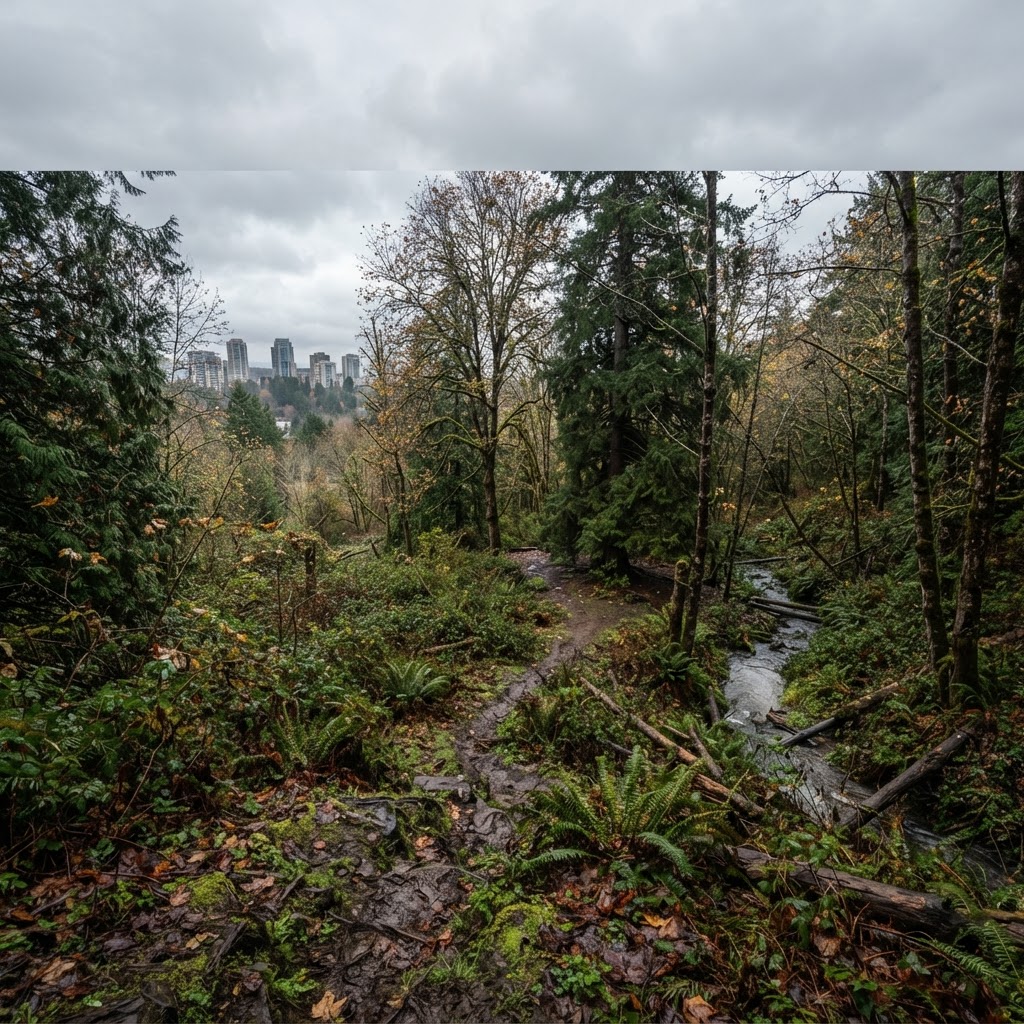
Bellevue continues implementing comprehensive tree preservation rules under its recently codified Land Use and Clearing and Grading codes, emphasizing strict protections for significant and landmark trees. Local arborists and stewards also face seasonal challenges from autumn soil saturation and storm windthrow as the city pursues its ambitious 40% canopy target.
Regulations & Permits
Bellevue enforce updated standards under both Land Use Code 20.20.900 (amended via Ordinance 6932) and the Clearing and Grading Code under BCC 23.76.035 and BCC 23.76.060 (amended via Ordinance 6934 in October 2026). Clearing permits are required to remove any significant tree (minimum 6-inch diameter) or landmark tree (24-inch or greater diameter), as well as for removing more than 25 percent of a preserved tree's live crown. Critical Area Overlay regulations remain strictly enforced; recent filings, such as a SEPA determination for an application on SE 1st Street, show that removals within environmentally critical areas—like a 75-foot stream buffer—mandate extensive on-site native replanting plans prepared or reviewed by qualified professionals.
Community Concerns
Canopy equity and retention during private site redevelopment continue to drive community dialogue across Bellevue neighborhoods. The city is working toward an overarching goal of 40% tree canopy cover, balancing aggressive growth with preservation across private and public parcels. Residents and neighborhood advocates remain focused on preventing net loss in lower-canopy sectors, addressing buffer alterations along residential streams, and ensuring that development projects provide adequate replacement plantings rather than relying solely on fee-in-lieu alternatives.
Ecosystem Challenge & Solution
November weather in western Washington brings prolonged rainstorms and saturated soils, significantly heightening the risk of windthrow, root-plate failure, and branch breakage in heavy-canopied trees. Property owners and arborists should mitigate hazards by clearing debris from primary drainage pathways, applying 2 to 4 inches of wood chip mulch away from the root flare to stabilize wet soils, and performing corrective structural pruning on overextended limbs. When replanting in moist, riparian, or rain-soaked residential soils, native western redcedar (Thuja plicata) or Pacific dogwood (Cornus nuttallii) provide strong root stability and bolster long-term ecosystem resilience.
Volunteer & Planting
The city's major annual Tree Giveaway completed its distribution of free residential trees this past October, and no new volunteer planting events or stewardship work parties have been announced for the upcoming week. Stewards and residents seeking future hands-on restoration and native planting projects can check the Bellevue Parks & Community Services natural area stewardship calendars for winter work party schedules.