City Intelligence · 11/21/2026
Canopy Daily · Nov 21: Lake Oswego Enforces Overhauled Tree Code and Advances Winter Ash Removals
Lake Oswego's amended Tree Code is actively reshaping residential permitting with a 45% tree retention standard, streamlined review timelines, and over-the-counter permits for ash trees. Simultaneously, the City has launched proactive removals of roughly 180 public ash trees this fall and winter to mitigate Emerald Ash Borer risks while seeking stewardship volunteers for canopy replanting.
Regulations & Permits
Major updates to the City of Lake Oswego Tree Code (Ordinances 2974 and 2978) took effect on October 1, 2026, establishing a new 'Clear & Objective' Track for Type II tree removal permits tied to new dwelling units and residential lot creation, as detailed by the City of Lake Oswego 2026 Tree Code Updates. Qualifying projects must generally satisfy a 45% minimum tree retention standard or incur a new Tree Retention Deficit Fee. Type II public comment windows have been shortened from 14 days to 7 days, with reviews streamlined to two weeks and appeals now decided by a hearings officer. Furthermore, standard tree mitigation ratios require 1:1 replacement (or 2:1 for significant trees removed for development) with a minimum 1.5-inch caliper deciduous tree or 6-foot evergreen, while a new over-the-counter permit is now active to expedite removal of susceptible ash trees ahead of pest infestation.
Community Concerns
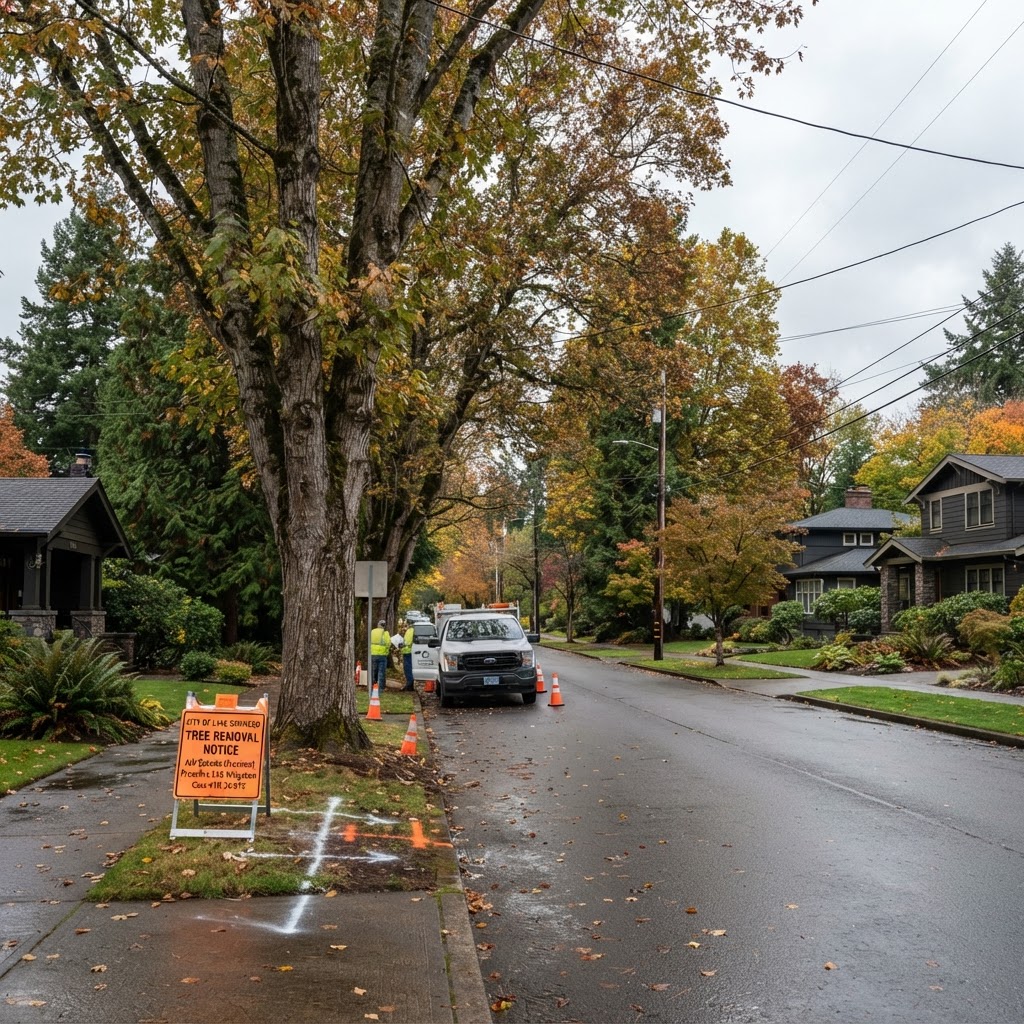
Neighborhood groups and residents are closely monitoring neighborhood canopy loss as contractors begin marking public ash trees with an 'X' for removal across heavily visited recreation spaces, including West Waluga Park, Southwood Park, and Woodmont Natural Park, according to the City of Lake Oswego Emerald Ash Borer Response. While advocates emphasize preserving shade and protecting against speculative tree clearing under the new residential permitting tracks, the City Council's multi-year EAB Readiness & Response Plan prioritizes proactive safety felling of vulnerable trees before they become hazardous.
Ecosystem Challenge & Solution
The dominant seasonal threat to Lake Oswego's urban forest this late autumn and winter is the Emerald Ash Borer (EAB), whose adult life stages enter winter dormancy as larvae overwinter in ash wood. The City's response involves strategically removing approximately 180 high-liability ash trees across municipal open spaces and facilities during the dormant period, reserving trunk injections for viable specimen trees in May and June, as documented in the Lake Oswego Emerald Ash Borer Readiness and Response Plan. Arborists and property owners replacing removed ash stands are instructed to plant resilient, native Pacific Northwest riparian and upland alternatives such as Oregon white oak (Quercus garryana), incense cedar (Calocedrus decurrens), or bigleaf maple (Acer macrophyllum) to build long-term canopy biodiversity.
Volunteer & Planting
To counteract urban canopy loss from preemptive EAB removals, Lake Oswego Parks & Recreation is hosting ongoing community restoration through its 'Our Ash Trees Are Leaving... Let's Get Planting!' initiative, as announced in the Winter/Spring 2027 Parks Activity Guide. Volunteers and community groups can participate in native tree planting and invasive species removal across natural areas and parks, including Springbrook Park. Interested residents and stewards should contact Natural Resource & Stewardship Coordinator Indira Palmer at stewardship@lakeoswego.city to register.