City Intelligence · 11/21/2026
Canopy Daily · Nov 21: Canopy Daily Beaverton: Fall EAB Pruning Window Opens as City Advances Pollinator and Tree Protection Plans
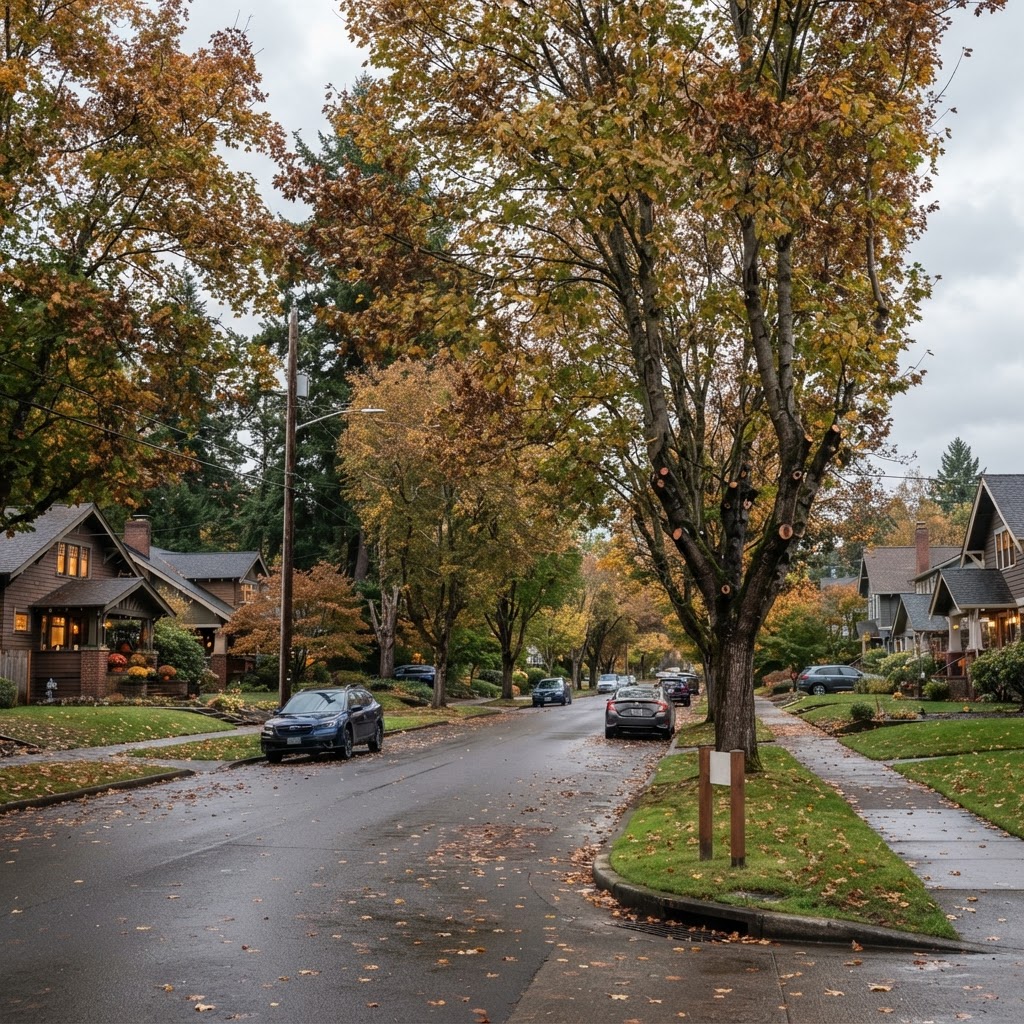
Following recent summer detections of the emerald ash borer within Beaverton limits, state and city arborists note that late autumn allows safe ash maintenance to resume while adult beetles are dormant. Meanwhile, local advocacy centers on urban wildlife coexistence and downtown pollinator initiatives as the city works to bolster canopy resilience.
Regulations & Permits
No new municipal tree permit code changes or fee adjustments were enacted this week; the Beaverton Code remains current through Ordinance 4883 as reported in 5.05.098 Vegetation and the public right-of-way | Beaverton Code. However, arborists and property managers should note that Washington County remains within the state emerald ash borer (EAB) quarantine area. According to the November 2026 Oregon Department of Forestry Tree Health Threats Bulletin, adult EAB flight activity has ended for the season, meaning necessary pruning and removals of ash trees can safely resume without heightening the risk of attracting or spreading active adult borers, provided wood movement quarantine restrictions are still observed. Additionally, Beaverton Code 5.05.098 requires property owners to clear hazards and maintain minimum branch clearances of 8 feet over sidewalks and 10 feet over roadways.
Community Concerns
Recent canopy and habitat advocacy in Beaverton reflects growing attention to urban biodiversity and wildlife coexistence along riparian corridors. As reported by the Beaverton Beat on living with beavers, a Portland State University survey gathered community perspectives on living alongside urban beavers along Fanno Creek following state-level protections under HB 3464, which restrict beaver removals and prompt regional strategies for managing dam-related flooding and tree damage. Simultaneously, community members and the Beaverton Downtown Association have championed native pollinator plantings, leading to City Council consideration of Bee City USA affiliation, according to the Beaverton Beat on Bee City USA status. At the broader administrative level, the City of Beaverton Climate Dashboard flags that development of the city's long-term Urban Forestry Master Plan remains delayed due to municipal funding and staffing constraints.
Ecosystem Challenge & Solution
The primary ecosystem challenge confronting Beaverton's canopy is the establishment of the invasive emerald ash borer (Agrilus planipennis), which was officially confirmed in local traps at Greenway Park earlier this year, as documented in Protecting Our Urban Forest | Beaverton, OR. EAB larvae feed within the inner bark, threatening virtually all untreated Oregon ash (Fraxinus latifolia) trees in riparian corridors and streets. The practical management solution is a coordinated strategy: certified arborists and municipal teams are protecting high-value street and natural-area ash trees using trunk-injected systemic emamectin benzoate insecticide every two to three years while adult beetles are inactive, as noted in the October 2026 ODF Tree Health Threats Bulletin. For long-term canopy diversification and replacement of vulnerable ash, native species such as Oregon white oak (Quercus garryana) and bigleaf maple (Acer macrophyllum) are recommended for upland areas, while western redcedar (Thuja plicata) and red alder (Alnus rubra) serve as resilient alternatives in moist riparian soils.
Volunteer & Planting
No specific public volunteer tree planting events with confirmed registration dates were announced for today, November 21, 2026. However, ongoing stewardship and replanting efforts remain active; the City of Beaverton's Urban Forestry team continues its partnership with Friends of Trees to diversify street canopies, having planted 60 street trees and over 2,000 native riparian trees and shrubs in local natural areas as highlighted in Protecting Our Urban Forest | Beaverton, OR. Residents seeking local volunteer opportunities can also connect with the Beaverton Downtown Association's Pollinator Pathway committee for upcoming habitat stewardship, or watch for regional riparian restoration projects organized by groups like Tualatin Riverkeepers along Fanno Creek, as referenced in Beaverton Beat's report on local watershed efforts.