City Intelligence · 11/13/2026
Canopy Daily · Nov 13: Kings County Arborist & Community Forest Update for November 13, 2026
Kings County tree stewards navigate ongoing autumn planting window standards alongside City Council proposals targeting street tree risk management and public planting request protocols. As urban canopy expansion accelerates across Brooklyn heat-vulnerable corridors, seasonal soil compaction and autumn root care remain vital priorities for long-term survival.
Regulations & Permits
According to the updated Street Tree Planting Standards for New York City 2026, NYC Parks enforces that the active fall street tree planting window runs from October 1 through December 31, with all installations requiring approved Tree Work Permits submitted via the online Tree Work Permit and Plan Review application. In municipal code developments, the City Council Committee on Parks and Recreation is weighing Int 0575-2026, which proposes strict mandatory resolution timeframes for hazards on public property—requiring Parks to mitigate 'extreme overall risk' trees within 7 days and 'high overall risk' trees within 28 days of inspection. Additionally, Int 1073-2026 would mandate that NYC Parks evaluate feasibility and plant approved public tree requests within one year. No fee adjustments or Environmentally Critical Area (ECA) rule revisions were enacted today.
Community Concerns
Canopy advocacy in Kings County remains centered on equitable distribution and sustained maintenance in heat-vulnerable communities. An announcement from the NYC Mayor's Office emphasized targeting new plantings in Brooklyn neighborhoods acutely exposed to urban heat, including Bushwick, East New York, Brownsville, Sunset Park, Crown Heights, East Flatbush, Coney Island, Flatlands, and Sea Gate. Local residents and stewards continue to push for transparent maintenance cycles and faster response times for structural hazard assessments to ensure newly planted street trees receive the structural pruning and hydration required to reach mature canopy status.
Ecosystem Challenge & Solution
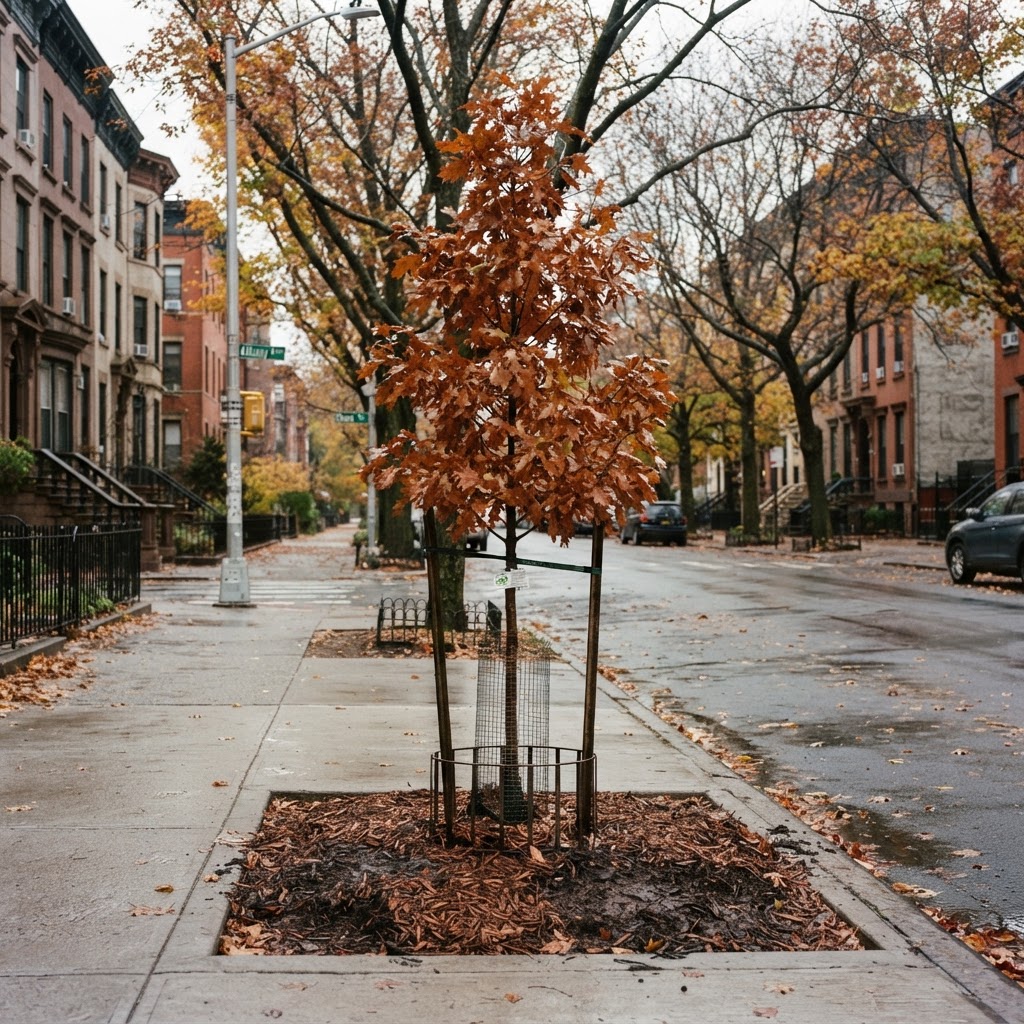
A critical late-autumn ecosystem challenge across Brooklyn's dense streetscapes is urban soil compaction coupled with moisture stress in young street tree pits before winter freezes set in. Heavy foot traffic compresses sidewalk tree beds, limiting oxygen diffusion and impeding root penetration. As an actionable solution, arborists and stewards should aerate compacted surface soil using hand cultivators, apply a 2- to 3-inch layer of organic wood-chip mulch—keeping mulch pulled back at least 3 inches from the root flare—and continue weekly deep watering of 15 to 20 gallons through late fall. For durable, native street plantings suited to urban conditions and moisture fluctuations, consider the Swamp White Oak (Quercus bicolor).
Volunteer & Planting
No specific local volunteer tree planting or bed stewardship workdays were scheduled in Kings County for today, November 13, 2026. However, urban forestry practitioners can participate in the statewide NYSDEC ReLeaf virtual training session, the 'NYC Tree Census Webinar', held today. Ongoing stewardship opportunities and winter tree bed care can be monitored via NYC Parks' volunteer portal.