City Intelligence · 11/13/2026
Canopy Daily · Nov 13: Minneapolis & Hennepin County Forestry Updates for November 13, 2026
Local municipalities across Hennepin County are advancing comprehensive rewrites of tree preservation codes while homeowners face ongoing financial strain from mandated removals of diseased trees. To bolster canopy resilience ahead of winter, regional forestry teams and the DNR are focusing on understory diversification to counter the impacts of emerald ash borer.
Regulations & Permits
Municipalities across Hennepin County are tightening tree codes to restrict canopy loss during development. In Spring Park, the Planning Commission's November 2026 agenda reviewed a proposed Tree Preservation Ordinance incorporating strict protections for heritage trees unless they pose an imminent hazard (City of Spring Park Planning Commission Agenda). Similarly, in Rogers, planning commissioners have pushed forward a major overhaul of section 125-90, establishing hardwood-for-hardwood replacement rules, a minimum 2-inch caliper standard, genus caps, and a proposed three-year warranty period tied to subdivision surety (Citizen Portal). These regional code updates require arborists and contractors to plan for increased buffer metrics and stricter replacement ratios on upcoming site permits.
Community Concerns
Financial burdens surrounding mandated tree removals remain a primary concern for Minneapolis property owners. The Minneapolis Park and Recreation Board recently conducted public hearings regarding special assessments levied against private properties to cover the costs of removing diseased trees between 2025 and 2026 (Minneapolis Park & Recreation Board Resolution 2026-158). With expenses placed onto property tax statements at a 4.10% interest factor over 5, 10, or 20 years, residents and officials continue to highlight the severe economic strain on homeowners, driving demand for subsidized removal and replacement programs.
Ecosystem Challenge & Solution
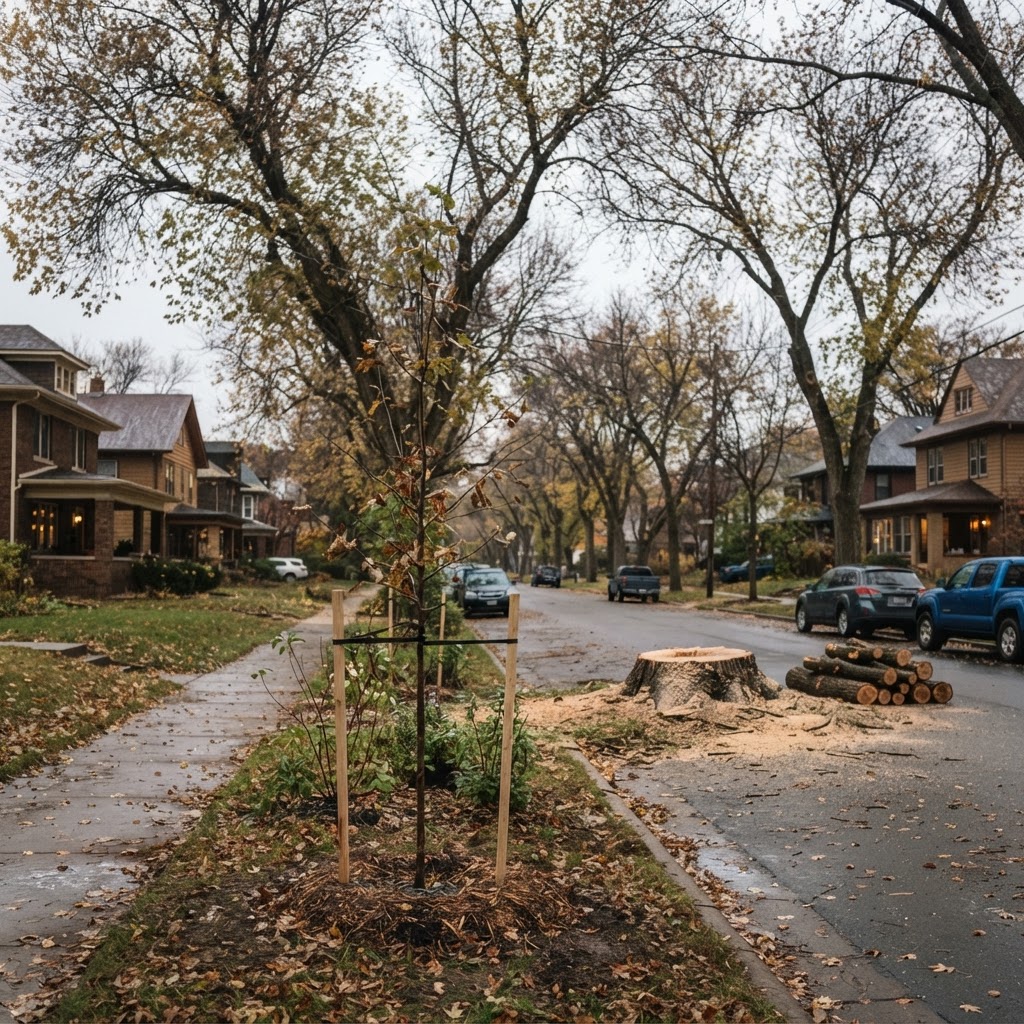
The emerald ash borer (EAB) continues to devastate local canopy cover, creating high volumes of hazardous dead timber and leaving canopy gaps in wet forest soils and urban lowlands. To resolve this without losing forest cover, forest managers are carrying out late-autumn understory plantings while swampy or low-lying sites are drier and easier to work. Practitioners are advised to replace lost canopy with hardy, flood-tolerant native species such as hackberry (Celtis occidentalis) and swamp white oak (Quercus bicolor), which tolerate challenging moisture regimes and diversify urban forests against pest infestations (Minnesota DNR).
Volunteer & Planting
No specific public volunteer planting events were found for today, November 13, 2026, as outdoor field work slows toward the winter season. However, Hennepin County Urban and Community Forestry continues to provide ongoing Tree Steward training classes in partnership with the University of Minnesota, which prepare volunteers for seasonal tree care, pruning, and community education (Hennepin County Urban and Community Forestry). Additionally, income-qualifying homeowners seeking canopy assistance should note that the county's next application round for assisted tree removal and replacement opens November 16 from 7 a.m. to 7 p.m.