City Intelligence · 11/12/2026
Canopy Daily · Nov 12: NYC Parks Unveils Brooklyn Fall Street Tree Push as Bushwick Planting List Expands
NYC Parks has updated its borough planting schedule, targeting over 170 new street tree sites in Bushwick alone as part of a push toward expanding canopy coverage across Kings County. Local tree stewards and property owners are coordinating maintenance plans as the agency prepares for late-autumn sidewalk planting runs.
Regulations & Permits
No new municipal tree codes, fee changes, or Environmental Critical Area (ECA) regulatory updates were enacted today for Kings County. Under standard NYC Parks forestry rules, all work on or adjacent to city street trees—including planting, pruning, and sidewalk bed modifications—continues to require an official NYC Parks Tree Work Permit. Furthermore, city policies govern public right-of-way street plantings, meaning designated sidewalk sites selected by the agency for the seasonal planting rollout cannot be unilaterally rejected or modified by adjacent property owners without an authorized Parks Department review.
Community Concerns
Canopy advocacy in Brooklyn remains focused on equitable distribution and site transparency following the release of updated street tree lists by NYC Parks, which slated 174 sites across Bushwick's Community Board 4 with high concentrations along corridors like Eldert Street and Bushwick Avenue (Bushwick Daily). While residents and environmental groups welcome new shade in heat-vulnerable neighborhoods, community members frequently highlight concerns over the tentative nature of planting dates, shifting site lists, and the need for clear communication regarding sidewalk maintenance responsibilities after installation.
Ecosystem Challenge & Solution
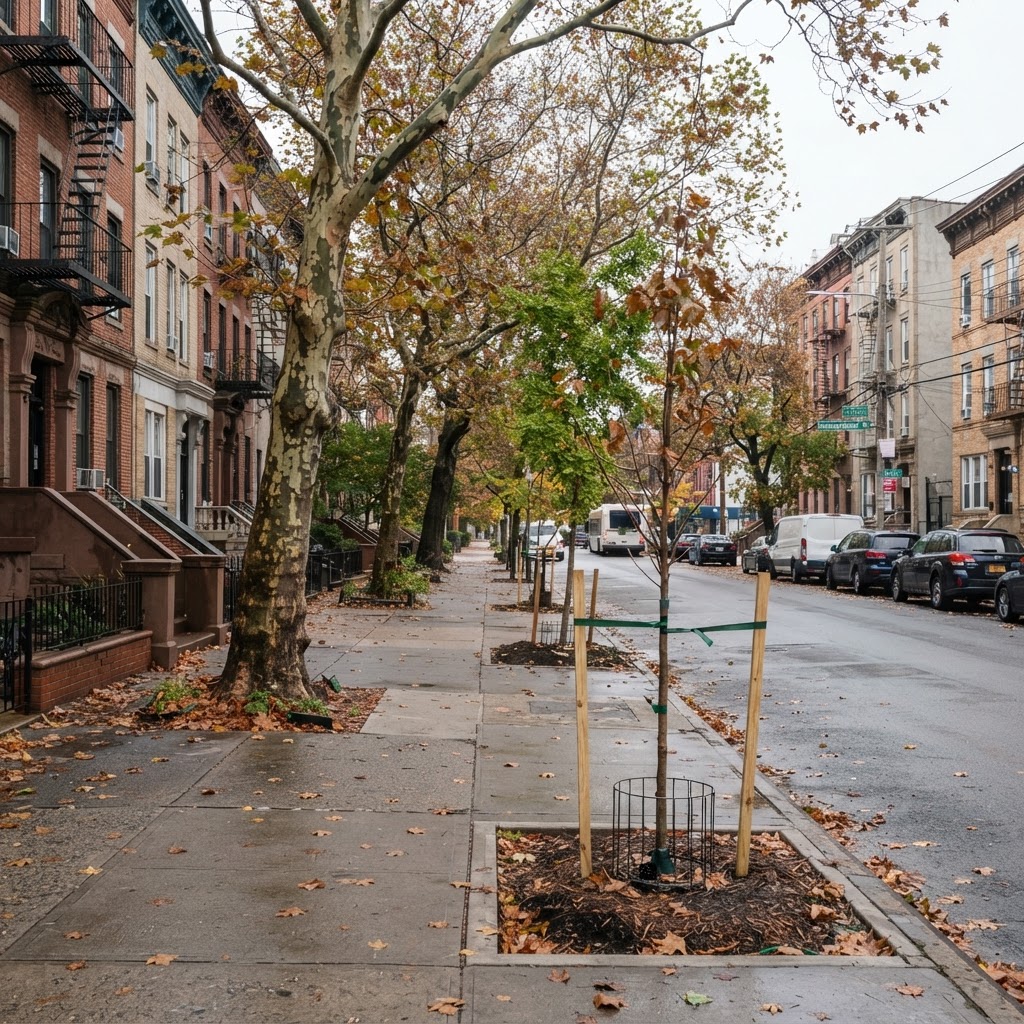
A critical late-fall ecosystem challenge across Brooklyn is severe soil compaction and seasonal moisture stress in newly excavated street pits before freezing temperatures set in. Intense pedestrian traffic and restricted pit surface areas prevent rainfall penetration, threatening root establishment for young transplants. Stewards can resolve this by gently aerating the top two to three inches of exposed pit soil using hand cultivators, adding a 2- to 3-inch layer of organic wood-chip mulch kept clear of the root flare, and applying slow-drip watering before hard ground frosts. For urban street corridors subject to compacted, alkaline soils and winter de-icing salts, the native Sweetgum (Liquidambar styraciflua) or Swamp White Oak (Quercus bicolor) are robust species choices for urban forestry resilience.
Volunteer & Planting
NYC Parks Stewardship is actively hosting late-autumn urban forestry and tree care opportunities across the boroughs (NYC Parks Stewardship Registration). In Brooklyn, upcoming opportunities include the Bed-Stuy Street Tree Care with Super Stewards initiative, along with late-month habitat and forest restoration events scheduled in local natural areas. Volunteers and neighborhood tree stewards can register through the NYC Parks stewardship portal to learn aeration techniques, mulch application, and tree pit care.