City Intelligence · 11/12/2026
Canopy Daily · Nov 12: Chicago Forestry Staffing Debates Intensify as Regional Fall Stewardship Season Concludes
Advocates are pressing Chicago leaders to restore senior forester positions to ensure the city's newly funded tree inventory leads to actionable management. Meanwhile, regional canopy initiatives like the MWRD sapling program wrap up for the year as local groups shift focus to late-fall plantings and woodland restoration.
Regulations & Permits
No new updates to municipal tree preservation codes or permit fee schedules were published for the City of Chicago this week. However, under existing Cook County Public Way regulatory provisions, tree-trimming permits remain mandatory for utility maintenance along County-controlled public rights-of-way outside Chicago. Under these standards, the County Highway Department enforces special measures—such as higher utility poles, side-arm extensions, and covered wire—to protect designated specimen trees from radical pruning and utility conflicts during active trimming schedules.
Community Concerns
Advocacy groups including Openlands and representatives from the Chicago Urban Forestry Advisory Board (UFAB) recently testified before the Chicago City Council Committee on Budget and Government Operations, as reported by Chicago City Wire. Advocates raised serious concerns that Chicago's new $3 million public tree inventory will fail to yield long-term benefits unless the Bureau of Forestry fills existing vacancies and restores senior city forester positions lost to retirement. Advocates stressed that dedicated forestry capacity is essential to translate inventory data into proactive tree care and equitable canopy expansion.
Ecosystem Challenge & Solution
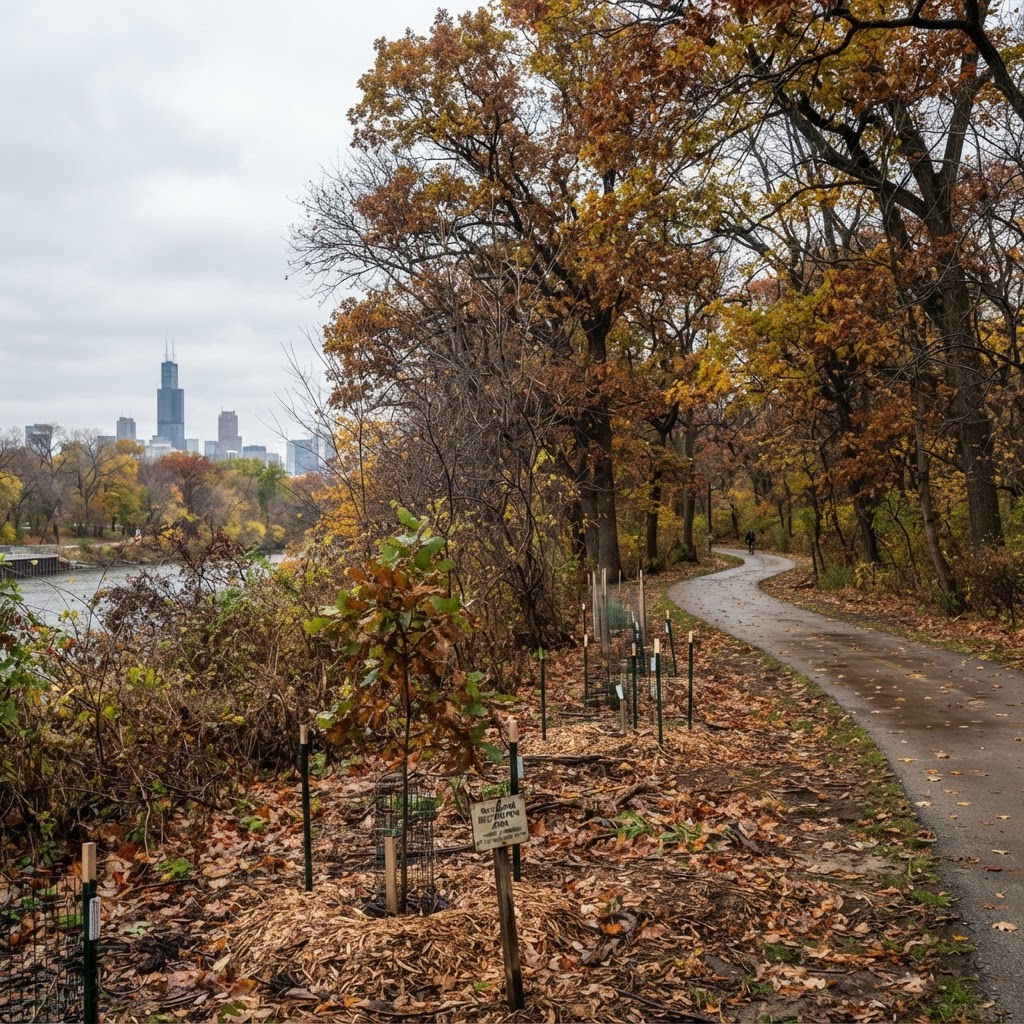
As Cook County transitions into late autumn, urban soils face severe freeze-thaw cycles, winter desiccation, and encroaching invasive understory competition in remnant woodlands. Arborists and land stewards recommend applying a 2- to 4-inch layer of organic wood mulch around root zones—avoiding direct contact with tree trunks—to preserve soil moisture and buffer roots against sub-freezing soil shifts. For fall planting and ecosystem restoration, the Metropolitan Water Reclamation District of Greater Chicago (MWRD FLOW) recommends native oaks, such as Swamp White Oak (Quercus bicolor) or Bur Oak (Quercus macrocarpa), which provide deep root systems that enhance local stormwater retention and withstand regional seasonal extremes.
Volunteer & Planting
While the MWRD announced the seasonal close of its 'Restore the Canopy' program after distributing 5,734 native oak saplings across Cook County in 2026 (MWRD FLOW), volunteer hands-on opportunities continue this week. Today, November 12, Openlands hosts a community fruit tree planting with Cooperation Operation stewards in Pullman (Openlands Events). On Friday, November 13, Openlands and the Forest Preserves of Cook County will host a pruning and mulching workday at Axehead Lake. Looking ahead to Saturday, November 14, Friends of the Forest Preserves will lead an invasive plant removal stewardship day at Dan Ryan Woods in Chicago.