City Intelligence · 11/12/2026
Canopy Daily · Nov 12: Minneapolis & Hennepin County Forestry Brief for November 12, 2026
Local initiatives continue to strengthen canopy resilience across Hennepin County through targeted tree removal assistance and regional planting grants. As winter approaches, arborists and residents must navigate evolving preservation rules and protect local soils from freeze-thaw stress.
Regulations & Permits
The City of Minneapolis continues work developing its comprehensive Tree Preservation Ordinance (TPO), designed to prevent avoidable tree loss, mandate replacement, and enforce post-construction tree health on construction sites (City of Minneapolis). Arborists, contractors, and developers should prepare for tighter standards regarding tree protection zones and root-impact mitigations during permitting. Neighboring Saint Paul recently enacted its municipal preservation rules applying to public projects bid after October 2026, signaling regional policy momentum toward stricter preservation across public and private infrastructure (Saint Paul Minnesota).
Community Concerns
Equity in canopy coverage and the financial toll of managing condemned or hazardous ash trees remain primary community issues in Minneapolis and broader Hennepin County (Hennepin County). Advocacy groups and residents continue emphasizing the need for accessible removal assistance for low-income homeowners facing condemned-tree notices, as canopy gaps along transit corridors like Interstate 94 in North Minneapolis disproportionately affect environmental justice communities (Hennepin County). Regional support from Metropolitan Council grants and county allocations aims to mitigate these disparities through coordinated public-right-of-way replanting (Metropolitan Council).
Ecosystem Challenge & Solution
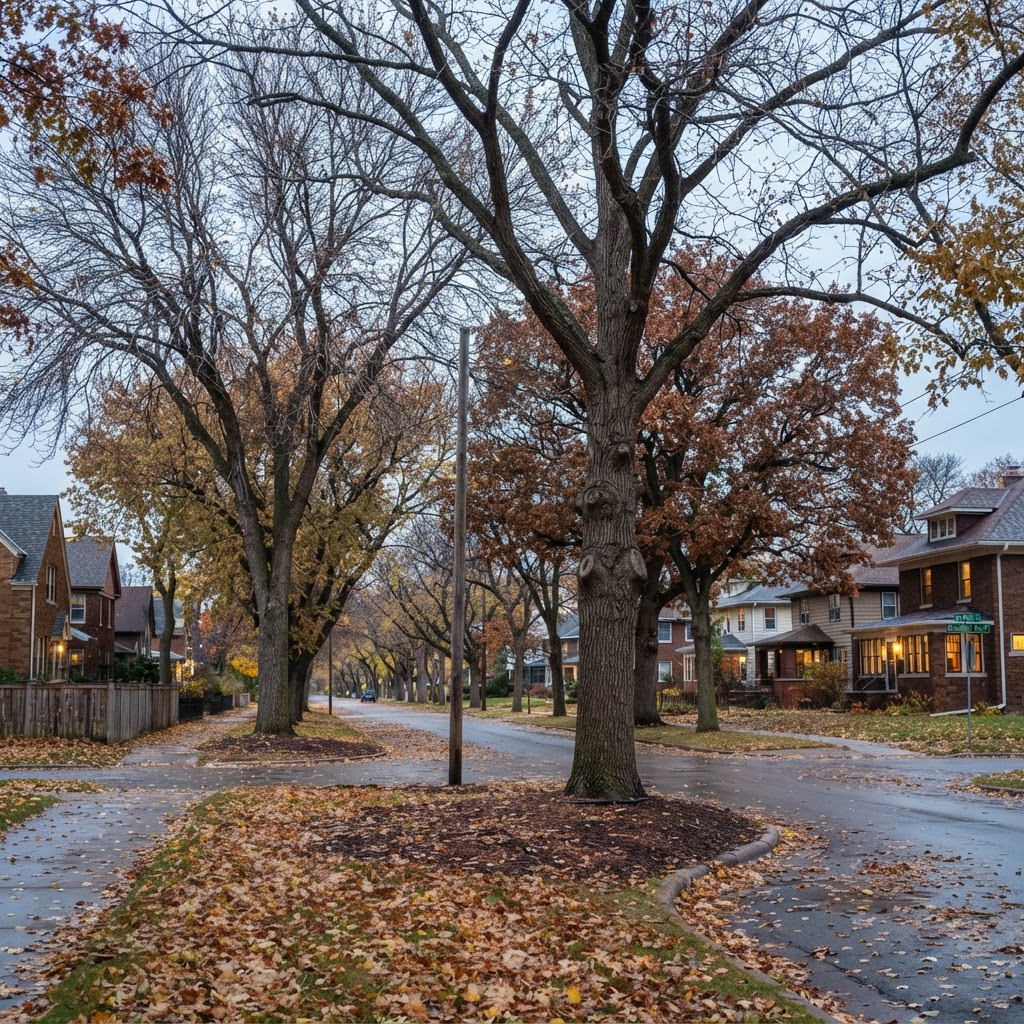
With mid-November bringing soil-freezing conditions to Hennepin County, newly installed trees face severe desiccation and root damage from winter drought and freeze-thaw cycles. Arborists and tree stewards should ensure young trees receive deep supplemental watering prior to ground freeze and apply a 3-to-4-inch layer of organic wood mulch around root zones while keeping mulch cleared several inches from the root flare. For resilient replacement plantings, consider the native bur oak (Quercus macrocarpa), which offers exceptional cold tolerance, deep taproot wind firmness, and resilience against regional climate variability compared to vulnerable monocultures.
Volunteer & Planting
While major regional fall planting campaigns conclude with early-November ground freezes, Hennepin County's Tree Steward education and community forestry programs continue engaging residents in tree health monitoring and planning for future planting seasons (Hennepin County). No new hands-on public tree-planting volunteer events were scheduled for today due to late-season ground frost, but eligible residents seeking low-income assistance or condemned tree support can review intake lottery schedules through Hennepin County and Minneapolis 311 (Hennepin County).