City Intelligence · 11/12/2026
Canopy Daily · Nov 12: Tech-Driven Tree Audits and Equity Debates Shape San Francisco's Canopy Agenda
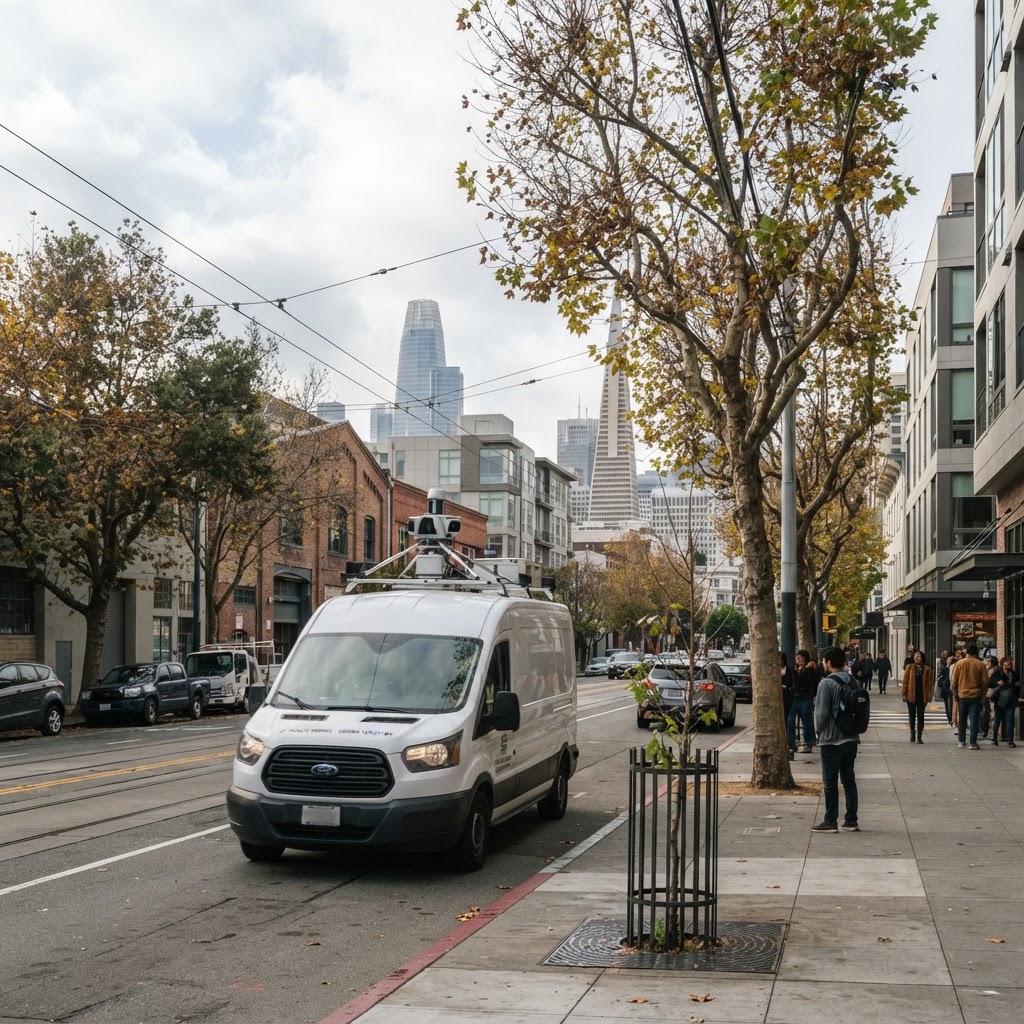
San Francisco Public Works is deploying vehicle-mounted LiDAR scanning across city streets to build high-precision digital twins for targeted tree maintenance. Concurrently, community advocates and city officials are grappling with significant canopy inequities in low-cover neighborhoods like SoMa alongside recent legislative overhauls for tree planting fees.
Regulations & Permits
San Francisco's legislative landscape saw major updates with the enactment of Ordinance 186-26, which amends the Public Works Code and Planning Code to allow qualifying development projects to satisfy street tree planting mandates via in-lieu fee payments deposited into an Adopt-A-Tree Fund subaccount or through alternative landscaping. The ordinance also exempts accessory dwelling units (ADUs) from tree requirements and streamlines hazardous municipal tree removals. In addition, the San Francisco Bay Conservation and Development Commission (BCDC) implemented unified shoreline permit rules with 10-day processing for minor repairs, and SF Public Works continues regular removal and sidewalk repair hearings under Public Works Code Article 16, with public hearings scheduled through late November.
Community Concerns
Canopy equity remains a central flashpoint as advocates from FairTrees San Francisco press the Board of Supervisors regarding hundreds of empty basins in District 6 neighborhoods like SoMa, where canopy coverage hovers at just 2.7% compared to the 13.7% citywide average. Community groups are demanding the repeal or revision of Public Works Order 187246, which restricts planting on sidewalks narrower than 7.5 feet and often leads to unplanted basins being concreted over. Meanwhile, public correspondence has pushed for Cal Fire Zone 0 defensible space compliance on municipal parcels to limit wildfire hazards from flammable species like blue gum eucalyptus.
Ecosystem Challenge & Solution
As mid-November brings the onset of wet, stormy winter weather to the Bay Area, saturated urban soils and high coastal winds significantly elevate the risk of branch failure and windthrow in trees with restricted root zones or internal decay. To address these hazards, arborists and Public Works are leveraging mobile LiDAR digital twins to detect crown imbalances, decay pockets, and vehicle clearance conflicts before severe winter storms hit. For stewards and property owners replacing hazardous street trees, planting wind-firm, drought-adapted native species like Coast Live Oak (Quercus agrifolia) or Island Mountain Mahogany (Cercocarpus betuloides var. blancheae) offers resilient root architecture and substantial habitat value while withstanding seasonal maritime gusts.
Volunteer & Planting
No specific newly scheduled volunteer plantings were posted for today; however, ongoing stewardship and basin maintenance can be coordinated via neighborhood partners such as Friends of the Urban Forest and SF Public Works. Residents and stewards are encouraged to monitor upcoming district planting schedules and report empty tree basins or storm damage through SF 311.