City Intelligence · 11/8/2026
Canopy Daily · Nov 8: Atlanta Waives Recompense for Food Access Project as Council Evaluates Tree Trust Fund Programs
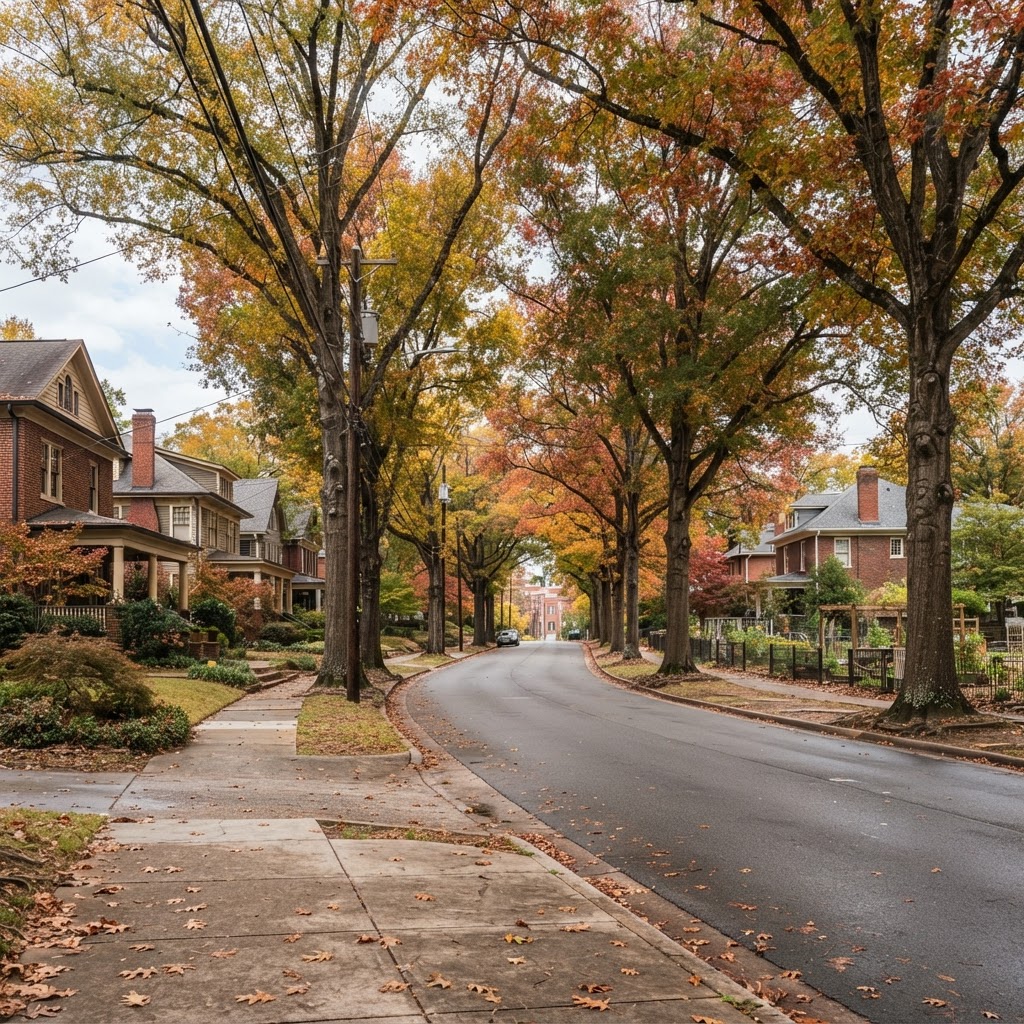
Atlanta City Council approved an $800,000 tree recompense fee waiver for a southwest Atlanta grocery project, sparking continued dialogue over balancing urban canopy goals with community development. Meanwhile, legislation advances to tap the municipal Tree Trust Fund to finance hazardous tree mitigation for low-income senior homeowners.
Regulations & Permits
On November 2, 2026, the Atlanta City Council voted 11-0 to adopt ordinance 26-O-1597, waiving approximately $800,000 in tree recompense fees for a planned Aldi grocery development at 3460 Cascade Road SW under Mayor Andre Dickens' Neighborhood Reinvestment Initiative (reported by Atlanta Live News). The waiver applies solely to the cash payment; standard development requirements—including parking lot and street tree plantings—remain mandatory under Chapter 158 of the City Code. In parallel municipal code developments, council committees are reviewing proposals regarding the Tree Trust Fund, including ordinance 26-O-1618 scheduled for the November 10 Finance/Executive Committee meeting to allocate up to $1,000,000 to the Georgia Arborist Association for assisting low-income seniors with hazardous tree removals and pruning, alongside proposed ordinance amendments 26-O-1634 and 26-O-1533 (Atlanta City Council Finance/Executive Committee, Atlanta City Council Tracker).
Community Concerns
Tree advocates and community members continue to monitor canopy impacts across Fulton County and metro Atlanta following city canopy assessments indicating forest coverage had dropped to 45.5%, representing a net daily loss of roughly 0.43 acres (Trees Atlanta). The recent administrative waiver of significant developer recompense on Cascade Road has raised questions among conservationists regarding fee exemptions versus preservation enforcement. Regional concerns are also mirrored in neighboring municipalities; for example, DeKalb County is actively reviewing updates to its 1999 tree protection ordinance after reports showed 80% of local canopy loss is linked to ongoing development (WABE).
Ecosystem Challenge & Solution
Late autumn in the Piedmont region of Fulton County brings root desiccation risks for young trees entering dormancy alongside severe soil compaction from fall storms and construction. A practical fix for arborists and landowners is establishing a 2- to 4-inch layer of organic wood-chip mulch over root zones out to the dripline—keeping it several inches away from root flares—and applying deep watering before winter freezes to protect developing root systems. For native plantings suited to heavy Georgia clay and autumn installation, arborists recommend native white oak (Quercus alba) or swamp white oak (Quercus bicolor), which provide high wildlife value and establish robust root structures throughout the cooler months.
Volunteer & Planting
Trees Atlanta is hosting its major regional planting campaign, Plantlanta 2026, on Friday and Saturday, November 13 and 14, 2026 (Trees Atlanta). The initiative will deploy hundreds of volunteers across 12 City Council districts to plant 700 canopy trees over the weekend, with project sites including Wilson Mill, Fairburn Road/Wisteria Lane, Hogan Road, and Ben Hill. Volunteer registration is open via Trees Atlanta for community members wishing to assist with planting, mulching, and site stewardship.