City Intelligence · 11/7/2026
Canopy Daily · Nov 7: Late-Autumn Tree Care, Assessments, and Forest Management Across Minneapolis and Hennepin County
This briefing highlights Minneapolis special assessments for diseased tree removal and ongoing efforts to manage canopy threats across Hennepin County. It also examines late-season ecological challenges from invasive woody species and outlines municipal and county programs available to urban forest stewards.
Regulations & Permits
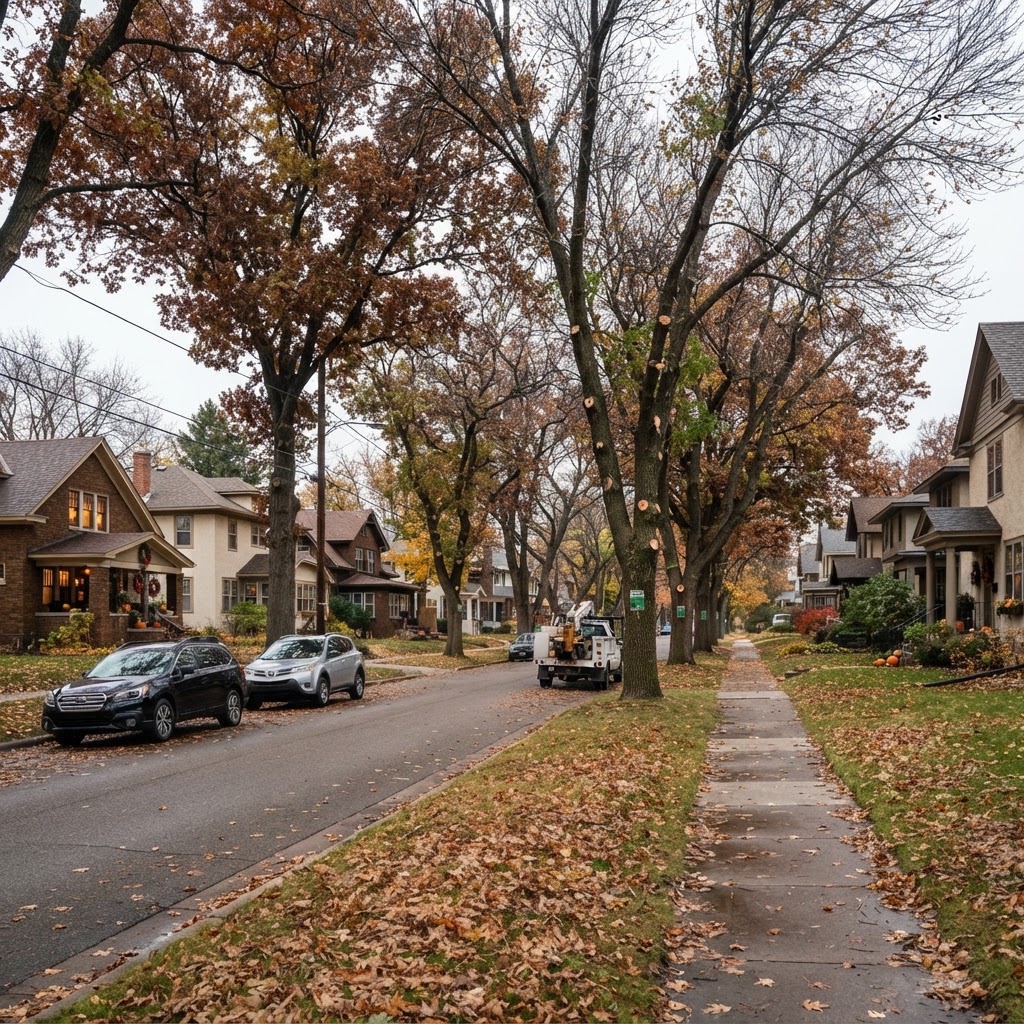
In Minneapolis, the Park and Recreation Board (MPRB) is addressing diseased tree removals on private property pursuant to Minnesota Statutes, section 18G.13 and section 429.101. Under Resolution 2026-158, the Board scheduled public hearings to assess removal costs against properties where diseased trees were condemned and removed, allowing homeowners to pay either in full or spread the cost over five, ten, or twenty years with a 4.10 percent interest factor on property tax statements. For regional context, the neighboring Saint Paul City Council enacted a comprehensive Tree Preservation Ordinance that took effect for public works projects bid after October 2026, setting rigorous tree protection planning and replacement standards that arborists working in adjacent metro jurisdictions should note. No new Minneapolis-specific environmentally critical area (ECA) permit fee changes were issued this week.
Community Concerns
Canopy equity and the high cost of mandatory diseased tree removals remain primary concerns for Minneapolis and Hennepin County residents. Communities continue to highlight the financial burden placed on property owners when ash trees infested with emerald ash borer (EAB) or other diseased canopies are condemned. To alleviate this strain, Hennepin County Urban and Community Forestry coordinates a federally funded tree removal and replacement program for eligible lower-income homeowners. Additionally, public stump backlog management along Minneapolis boulevards remains an ongoing advocacy topic, as MPRB contracted $700,000 for stump grinding services to tackle an accumulating multi-year backlog and ensure street spaces can be replanted.
Ecosystem Challenge & Solution
As native canopies shed foliage in November, common buckthorn (Rhamnus cathartica) and other invasive woody species present a critical ecological challenge by holding green leaves longer than native understories and displacing regenerating hardwoods. Hennepin County is addressing this with forest enhancement projects, such as an active solicitation for Birch Island Woods forest enhancement services covering 42.8 acres of oak forest. A practical late-fall fix for property owners and arborists is targeted cut-stump herbicide application or mechanical extraction while buckthorn is easily identified. To restore biodiversity and long-term climate resilience, stewards should underplant with native oak species such as Bur Oak (Quercus macrocarpa) or White Oak (Quercus alba), supplemented with approved native understory suppression seed mixes.
Volunteer & Planting
No specific single-day volunteer tree planting events were identified for this immediate weekend. However, ongoing municipal and county stewardship initiatives continue: Hennepin County Trees and Forestry offers regular Tree Steward classes and seasonal planting partnerships with host cities and the University of Minnesota to instruct volunteers in biology, watering, and pruning. Additionally, the Hennepin County Healthy Tree Canopy Grant Program supports schools and non-profit organizations in funding community-led plantings, with application materials available ahead of early 2026 cycles.