
Canopy Daily · November 9, 2026
Canopy Advocates Push Chicago Budget Panel to Fund Foresters as County Expands Fall Stewardship
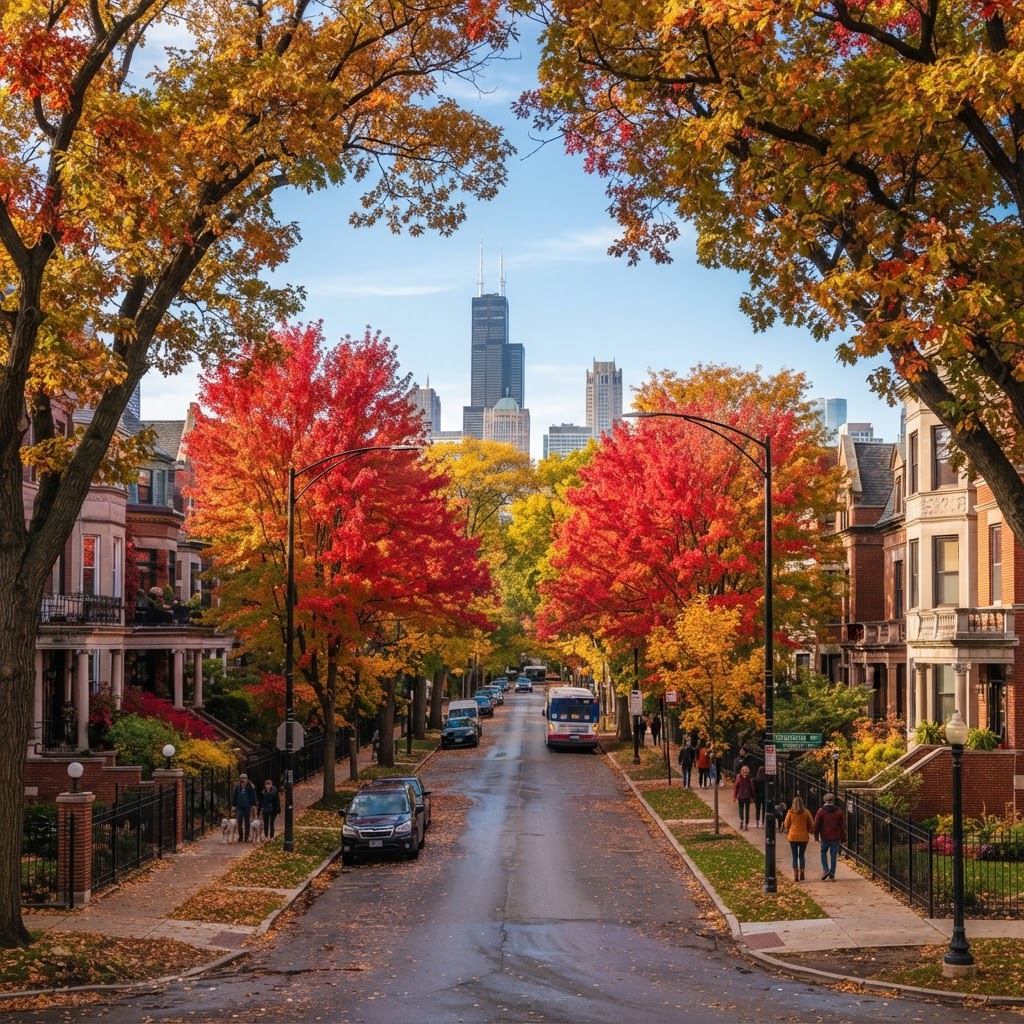
Urban forestry advocates are urging the Chicago City Council to fund dedicated senior forester positions to protect tens of thousands of newly planted parkway trees. Meanwhile, Cook County and regional partners continue fall stewardship campaigns and municipal code enforcement across local communities.
Regulations & Permits
In Cook County municipal updates, neighboring Hometown recently amended its tree code to mandate permits for the removal of trees over 20 feet tall, establishing a $25 permit fee, a $250 noncompliance fine, and mandatory insurance coverage for tree removal contractors, as reported by [Citizen Portal](https://citizenportal.ai/articles/10786242/Illinois/Cook-County/Hometown/Ordinance-committee-to-require-permits-for-removal-of-trees-taller-than-20-feet). Within Chicago proper, no new tree code or permit fee adjustments were enacted this week; standard Department of Transportation (CDOT) and Bureau of Forestry permits remain required for any work affecting parkway trees. Practitioners should also track policy discussions hosted by the Chicago Urban Forestry Advisory Board (UFAB) to anticipate future municipal regulatory shifts.
Community Concerns
Canopy advocates from Openlands and the Chicago Urban Forestry Advisory Board delivered public testimony before the Chicago City Council Committee on Budget and Government Operations, warning that roughly 75,000 recently planted trees risk dying without sufficient staff to inspect and maintain them, according to [Chicago City Wire](http://chicagocitywire.com/chicago-budget-panel-told-newly-planted-trees-need-more-foresters-to-survive). Forestry advocates pressed city officials to fund and fill senior city forester vacancies to support the Bureau of Forestry and ensure the city's underway public tree inventory can be actively operationalized into a viable urban forest management plan, as detailed by [Chicago City Wire](http://chicagocitywire.com/chicago-forestry-advocates-press-budget-committee-to-add-senior-forester-positions).
Ecosystem Challenge & Solution
Late-autumn in Cook County presents heightened risks of moisture loss and winter root desiccation for newly installed saplings, worsened by compacted urban clay and upcoming de-icing salt exposure. As documented by the [U.S. Climate Resilience Toolkit](http://toolkit.climate.gov/case-study/fortifying-chicagos-urban-forest), decades of pest pressures like the emerald ash borer alongside heavy storm events necessitate robust species selection and early establishment care. A practical fix is applying a 2- to 4-inch layer of natural arborist wood mulch in a wide ring while keeping mulch away from the root flare, paired with thorough watering before the first hard ground freeze. For late-fall plantings, practitioners are encouraged to choose resilient native shade species such as bur oak (Quercus macrocarpa) or swamp white oak (Quercus bicolor) to diversify canopy structure.
Volunteer & Planting
Stewardship and educational activities continue throughout November. The Chicago Urban Forestry Advisory Board Education Working Group holds a public session on November 9, 2026, followed by volunteer street tree pruning workdays in Lincoln Square and Ogden Park on November 10, according to [Openlands](https://openlands.org/events). Additional upcoming stewardship events include a Community Tree Care Day at Chicago State University and a Little Oaks education session on November 11, as well as a Forest Preserves of Cook County workday at Axehead Lake on November 13, per [Openlands Events & Volunteering](https://openlands.org/event/how-cities-like-chicago-impact-our-planets-health?ki-cf-botcl=1).