
Canopy Daily · November 7, 2026
Canopy Daily: Forestry Advocates Urge Budget Action as Fall Stewardship Closes Across Cook County
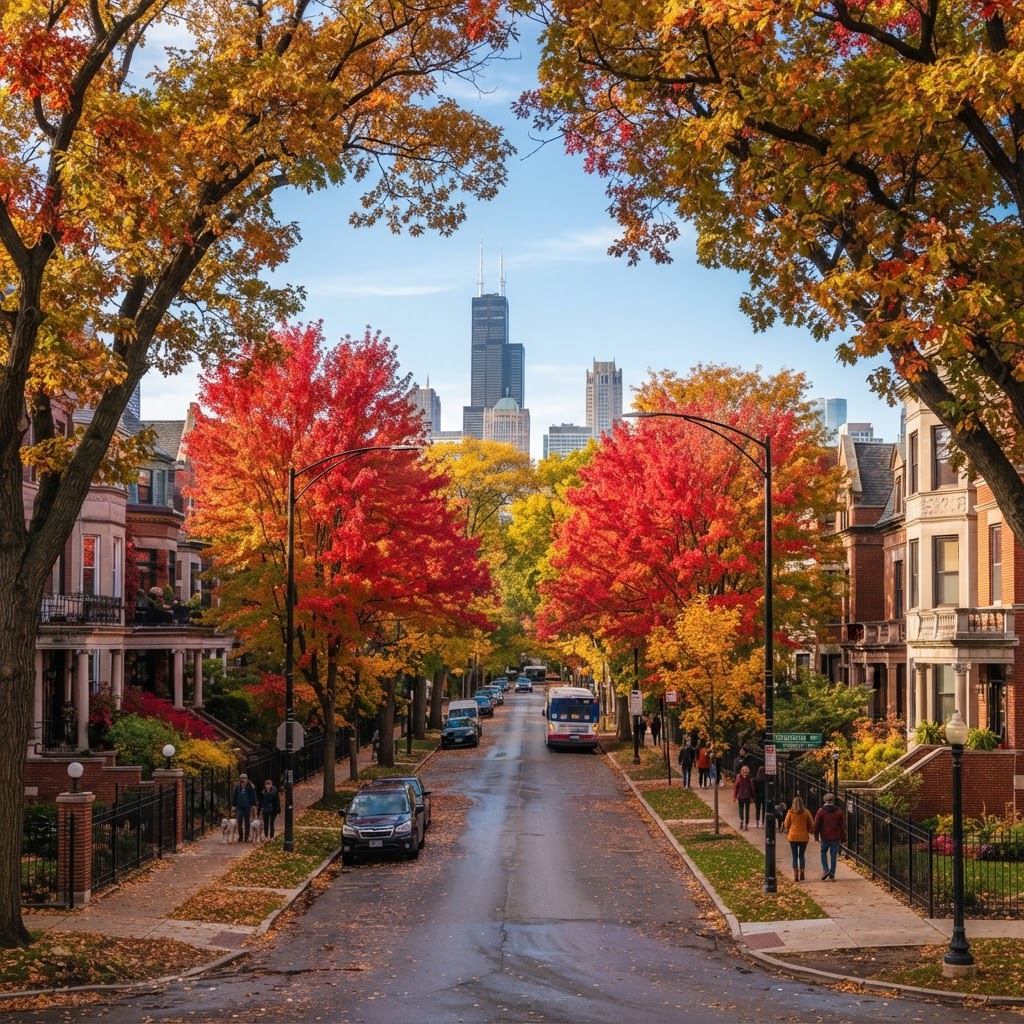
Forestry advocates are lobbying Chicago City Council to fund critical senior forester positions to ensure the city's $3 million tree inventory is fully leveraged. Meanwhile, regional tree-planting programs are winding down for the season, shifting community focus toward dormant-season pruning and woodland restoration.
Regulations & Permits
In Cook County municipal code updates, Hometown recently advanced tree ordinance amendments requiring permits for removing trees taller than 20 feet, establishing a $25 permit fee, a $250 noncompliance fine, and mandatory contractor insurance reviewed by Code Enforcement and Public Works, as reported by [Citizen Portal](https://citizenportal.ai/articles/10786242/Illinois/Cook-County/Hometown/Ordinance-committee-to-require-permits-for-removal-of-trees-taller-than-20-feet). In neighboring Homer Glen, officials are phasing in their updated Private Tree Preservation Ordinance (OR26-043) enacted this autumn to protect mature trees on private parcels alongside their unchanged public tree preservation rules, according to the [Village of Homer Glen](https://homerglenil.org/2854/NEW-TREE-REGULATIONS). No new updates were found regarding Chicago-specific Environmentally Critical Areas (ECA) or Bureau of Forestry permit fee adjustments today.
Community Concerns
Urban forestry advocates from Openlands and the Chicago Urban Forestry Advisory Board (UFAB) recently testified before the Chicago City Council Committee on Budget and Government Operations, as covered by [Chicago City Wire](http://chicagocitywire.com/chicago-forestry-advocates-press-budget-committee-to-add-senior-forester-positions). Advocates warned that the city's $3 million public tree inventory will fail to achieve projected savings and proactive management without restoring vacant and retired senior city forester roles within the Bureau of Forestry. They emphasized that professional capacity is critical to inspect, maintain, and protect canopy assets once the full public tree inventory wraps up next year.
Ecosystem Challenge & Solution
Late-autumn in northeastern Illinois brings critical risks of soil compaction and root damage from heavy precipitation events and seasonal yard traffic, along with moisture stress heading into winter freezes. Arborists recommend aerating compacted soil zones, installing a uniform 2-to-4-inch layer of natural wood mulch leaving root flares exposed, and utilizing captured runoff as outlined in the [MWRD November 2026 FLOW Newsletter](http://www.mwrd.org/news/mwrd-flow-november-2026). For sustainable canopy restoration and optimal stormwater absorption in local clay-heavy soils, stewards recommend planting flood- and drought-tolerant native oaks such as the Swamp White Oak (Quercus bicolor) or Bur Oak (Quercus macrocarpa).
Volunteer & Planting
The Metropolitan Water Reclamation District announced that its 'Restore the Canopy' oak sapling giveaway has officially closed for the season after distributing 5,734 saplings across Cook County in 2026, with plans to resume in April 2027, according to the [MWRD November 2026 FLOW Newsletter](http://www.mwrd.org/news/mwrd-flow-november-2026). Active stewardship opportunities continue: Openlands TreeKeepers are hosting a street tree pruning workday today, November 7, from 1:00 PM to 3:00 PM in the 40th Ward, followed by a Community Tree Care Day at Chicago State University on November 11, per [Openlands](https://openlands.org/event/how-cities-like-chicago-impact-our-planets-health?ki-cf-botcl=1). Additionally, the [Forest Preserves of Cook County](http://fpdcc.com/events/category/volunteer) will host 'R.I.P. Stewardship' invasive species removal at Little Red Schoolhouse Nature Center on November 14.